Fusion technology company Tokamak Energy has been confirmed as Magnet Systems Partner for the UK’s Spherical Tokamak for Energy Production (STEP) programme, under a contract running to March 2029. The deal positions the firm at the centre of the UK’s plan to develop a first‑of‑a‑kind fusion power plant at West Burton, in Nottinghamshire.
The contract, awarded by UK Fusion Energy (UKFE), sees Tokamak Energy lead eight magnet‑related work packages across the STEP programme, working closely with UKFE’s integrated team on magnets, tokamak systems and plasma integration. Delivery will be led through TE Magnetics, the company’s high‑temperature superconducting (HTS) division, which combines in‑house design, manufacturing and test capabilities for advanced HTS‑based magnet systems.
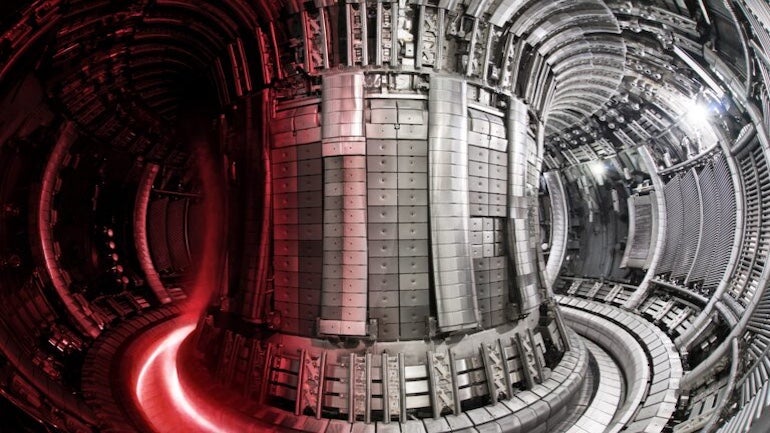
Tokamak Energy is a leading developer of HTS magnet technology, having demonstrated high field strengths and system performance for next-generation fusion devices. The agreement also gives UKFE continued access to the company’s ST40 compact, high‑field spherical tokamak, which recently achieved record plasma current and energy performance and will serve as a high‑field testbed for magnet and plasma configurations under realistic conditions.
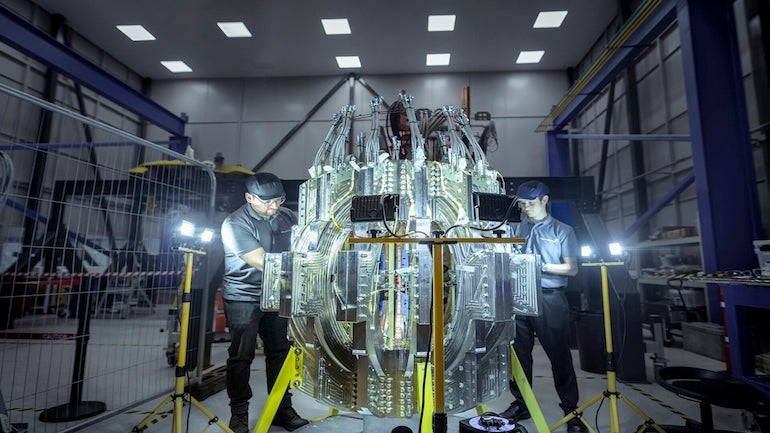
The company’s Demo4 HTS magnet system set a world‑first for a full tokamak‑configured system, reaching 11.8 Tesla at cryogenic temperatures with seven million ampere‑turns, replicating fusion‑relevant magnetic environments at system level. Tokamak Energy’s 2025 acquisition of Ridgway Machines, a specialist in superconducting cable manufacturing and coil winding equipment, strengthens its ability to deliver HTS components at scale.
UKFE’s Chief Commercial Officer Dan Bishop said the partnership accelerates engineering iteration and risk reduction for one of the most technically demanding aspects of STEP.
STEP director and Tokamak Energy CEO Warrick Matthews said the contract recognises both the company’s track record in operating advanced fusion hardware and reinforces the UK’s sovereign magnet manufacturing capability, reducing reliance on overseas supply chains and supporting the broader goal of low‑carbon, secure fusion‑based power.