
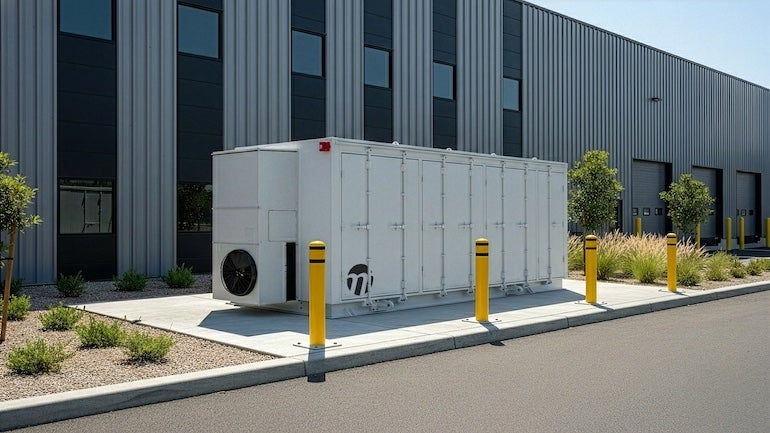
Moment Energy has closed a $40 million Series B round, bringing its total capital to over $100 million and marking one of the latest bets on repurposed EV batteries as a backbone for next‑generation energy storage. The round was led by Evok Innovations, with participation from Liberty Mutual Investments, W23 Global Fund and Acario, Tokyo Gas’s corporate venture arm, alongside existing backers including Amazon’s Climate Pledge Fund, Voyager Ventures and In‑Q‑Tel.
The funding comes at a time when AI‑driven demand and electrification are pushing the US grid close to breaking point, with power availability now a key constraint on industrial and digital growth. Rather than relying on new build, first‑life lithium‑ion systems, Moment is building commercial‑scale storage from second‑life EV batteries already on North American roads. The company says this approach sidesteps long lead times, large capex and geopolitical supply chain risks that have hampered legacy battery suppliers.
Moment’s systems are the first and only EV battery repurposing solution to achieve full UL 1974 and UL 9540A certification, allowing them to be deployed in the built environment without special exemptions. The company’s pack‑swapping architecture extends system lifespans to 30 years, double the typical 15‑year horizon for conventional BESS, and with tax incentives the combined cost of ownership can fall to around 3 cents per kWh for industrial users.
Moment has also engineered one of the densest second‑life battery platforms on the market, with up to 164 MWh of storage per acre, aimed at manufacturers and hyperscalers in space‑constrained settings. With the new capital, the company is expanding its Texas Gigafactory and facilities in British Columbia to meet growing demand from data centres, hospitals, factories and microgrids, while working with OEM partners such as Mercedes-Benz Energy to lock in a steady supply of retired EV packs ahead of recycling.
For the grid and industry, the strategy points to a hybrid model where the “global battery shortage” is at least partly addressed by repurposing existing assets already circulating in the transportation sector, rather than solely ramping up first‑life mining and cell production.


