
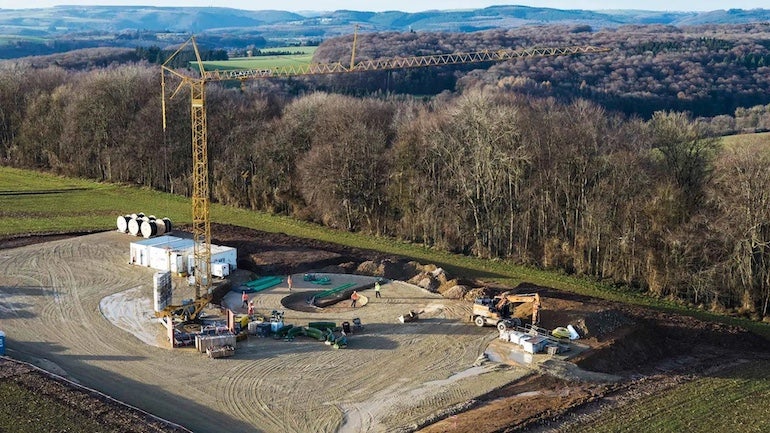
Construction is now underway on the Hommerdingen-Biesdorf hybrid power plant. Somewhat surprisingly this is Vattenfall’s first combination of wind and PV in Germany. Vattenfall believes it “sets standards for modern, cost-efficient, and grid-friendly power generation.”
The Hommerdingen-Biesdorf hybrid facility consists of four wind turbines manufactured by Enercon, with a total rated output of 17 MW, and some 12000 solar modules with a rated output of 7.6 MWp. The hybrid power plant is being built across the municipal areas of Hommerdingen (wind park) and Biesdorf (solar), both part of the Südeifel municipality near the Luxembourg border. According to current plans, commissioning of the plant is scheduled for autumn 2026.
With the Hommerdingen-Biesdorf project, Vattenfall is pursuing the approach of not connecting the solar park separately but linking it to the distribution grid through the wind park of the local grid operator Westnetz. Technically, the solar park is thus treated as an additional wind turbine, requiring only one grid connection for the entire installation — an approach to which Westnetz agreed.
“We are pleased to implement the combination of wind and solar together with our local grid partner Westnetz,” says Philipp Heucke, head of onshore wind development at Vattenfall in Germany. “The complementary generation profiles of wind and solar relieve the distribution grid compared to individual generation technologies. This leads to more efficient use of the grid infrastructure and reduces the risk of grid overload. In addition, the costs for the grid connection decrease significantly compared to stand alone plants. This lowers the cost of renewable electricity and ultimately benefits customers.”
Hybrid parks combine renewable generation facilities such as wind and solar, but can of course also be combined with battery storage. In the Netherlands, Vattenfall already has in operation the Haringvliet energy park — a full hybrid power plant combining wind, solar and battery storage, a first of a kind for the Swedish company, which it said would “serve as a blueprint for future projects.”
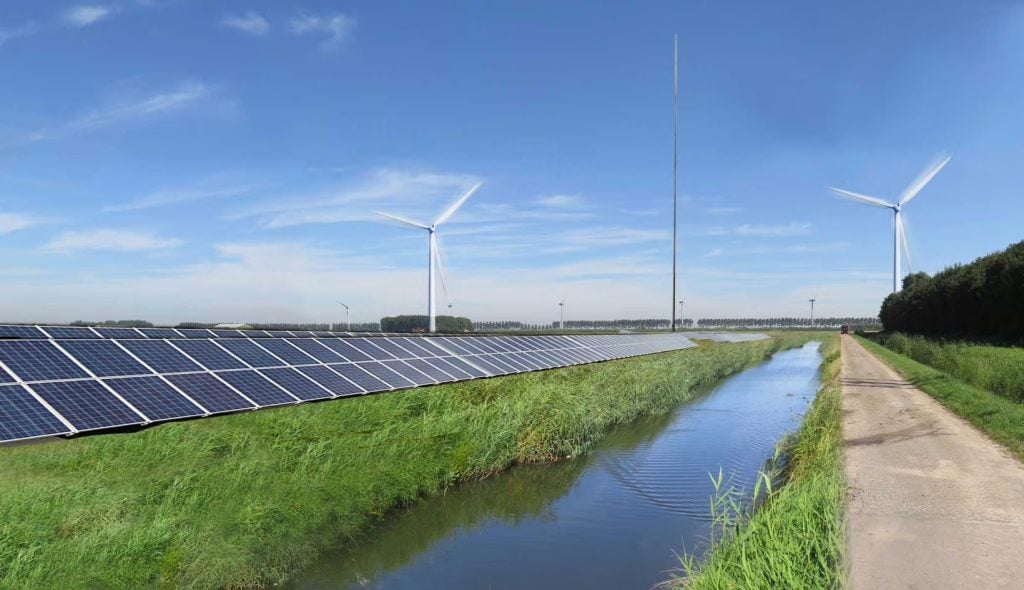
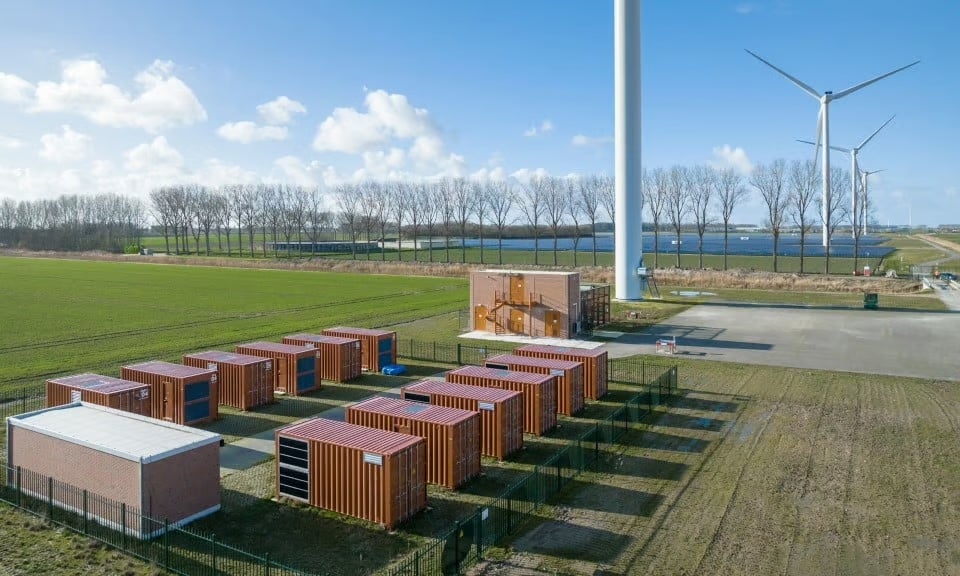
Located 20 km south of Rotterdam, Haringvliet consists of six wind turbines, 115 000 solar panels and 12 sea containers full of batteries, able to produce approximately 140 GWh of electricity annually. The wind turbines, solar PV and batteries jointly share the same grid connection.
“Wind and solar power complement each other well during different seasons and can share the same grid connection, leading to less connections needed to be reserved in the grid,” says Vattenfall. “The battery ensures that the net remains in balance. Also, the sharing of substation, cables, grid connection and the maintenance of roads saves time, money and reduces environment impact.”
SUNOTEC and Statkraft in Germany
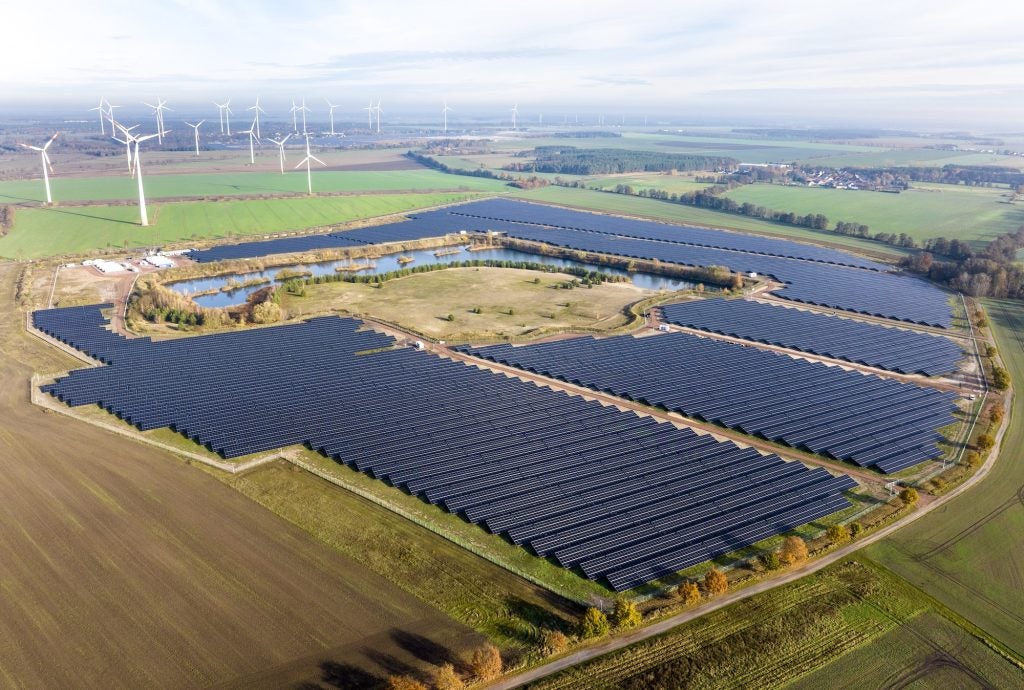
Another example of a hybrid power plant in Germany is the Zerbst project, developed by Statkraft and implemented by SUNOTEC, which is on target to become Germany’s largest solar–battery hybrid power plant under the country’s Renewable Energy Sources Act (EEG).
For SUNOTEC, headquartered in Sofia, this project marks a significant achievement being the company’s first hybrid power plant in Germany and a proof of concept for what it calls its “fully integrated, beyond-EPC delivery model.”
Located on a 41 hectare former gravel pit, the site combines 73 000 solar modules with an installed capacity of 46.4 MWp and a 57 MWh battery energy storage system, which will help stabilise the grid and improve system flexibility.
The facility is said to be “designed and built to operate as a fully co-located hybrid asset, providing grid-supportive, dispatchable renewable power.”
SUNOTEC says the Zerbst project showcases SUNOTEC’s end-to-end capabilities, spanning planning, engineering, manufacturing, construction and long-term operations. Rather than acting as a traditional EPC coordinator, SUNOTEC assumes ownership of the full project value chain, “ensuring quality, accountability, and technical consistency at every stage.”
SUNOTEC says it executed the core phases of the Zerbst hybrid power plant internally. Engineering, geotechnical assessments, and environmental planning were carried out by SUNOTEC’s own specialists, ensuring an optimised hybrid layout and seamless co-ordination between PV and battery energy storage system design. The plant was built using SUNOTEC’s proprietary fixed-tilt mounting systems, engineered by SUNOTEC Mounting Systems and manufactured by SUNOTEC Steel, providing mechanical stability, installation efficiency, and full quality control across the substructure. During construction and implementation, SUNOTEC deployed its in-house teams and hybrid-system experts, enabling streamlined execution and predictable progress throughout the project, the company says.
Following completion, SUNOTEC will continue to manage the operation and maintenance of the PV system, “safeguarding performance throughout the asset’s lifecycle and reinforcing the power plant’s long-term value.”
This approach reduces interfaces, eliminates fragmentation and guarantees high-quality delivery, the company asserts.
Equinor strengthens integrated power portfolio in Brazil
An integrated approach of a slightly different kind is also being pursued by Equinor in the development of its renewables portfolio in Brazil.
It has recently acquired the ready to build 230 MW Esquina do Vento onshore wind complex from Vestas. With this investment Equinor says it is expanding its broad energy offering in Brazil, “further strengthening its integrated power portfolio for long-term growth in one of the company’s core markets.”
The 51 turbine Esquina do Vento complex is located in the state of Rio Grande do Norte. The acquisition, conducted by Equinor’s fully owned subsidiary Rio Energy, supports Equinor’s power strategy to build market-driven, multi-technology portfolios. By combining renewable generation, operational capabilities and energy trading, these portfolios will further enhance value creation, the company says. The Esquina do Vento complex is expected to deliver double digit project returns.
“Brazil is a key market for Equinor’s long-term growth. We have a solid and diversified portfolio of oil and natural gas in the country. With this acquisition, we are expanding in renewable energy and strengthening our integrated power portfolio, where wind, solar and trading work together to deliver competitive and reliable power,” says Helge Haugane, executive vice president for power, Equinor.
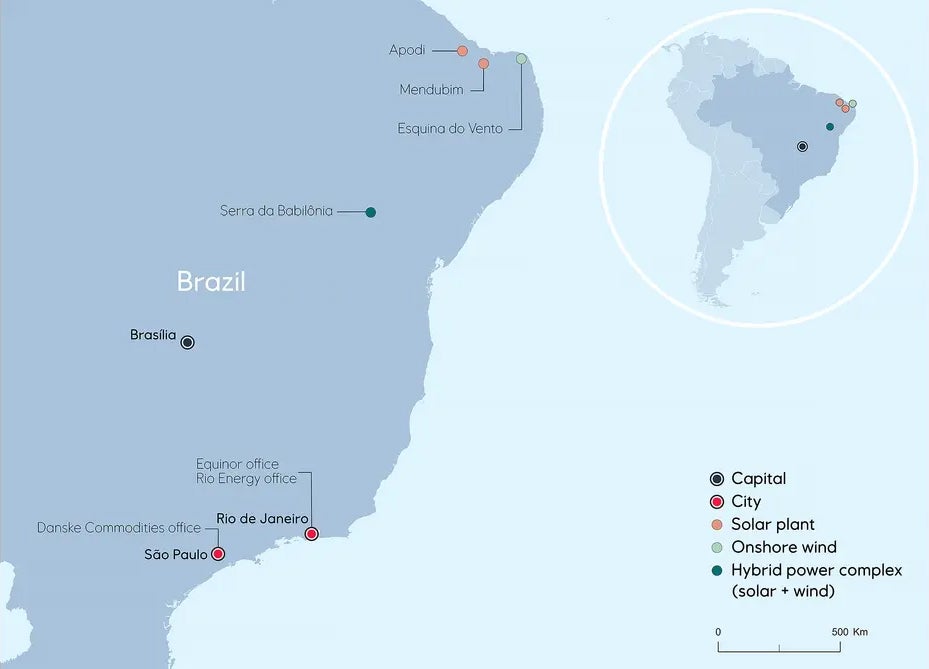
Together, onshore renewables and battery energy storage systems constitute a core building block in Equinor’s power strategy, offering competitive generation and scalability. The acquisition of Esquina do Vento adds to Equinor’s onshore renewables portfolio in Brazil. The complex will be developed and operated through Equinor’s subsidiary Rio Energy, which serves as the company’s vehicle for growth in onshore renewables.
“We are ready to build the Esquina do Vento complex that comprises 51 Vestas wind turbines and will add around 230 MW of installed capacity in Rio Grande do Norte. With potential annual generation of about 1 TWh, the complex represents a substantial addition to wind power production in the region. Together with Serra da Babilônia, our 363 MW hybrid wind/solar complex in Bahia, Esquina do Vento increases Rio Energy’s onshore wind footprint and reinforces a strong operational platform for long-term renewable energy delivery in Brazil,” says Roberto Colindres, CEO of Rio Energy.
This investment is in line with Equinor’s strategy of building an integrated power business, combining wind and solar assets in the same market, reducing intermittency, optimising grid utilisation and improving the overall value of the power portfolio.


