
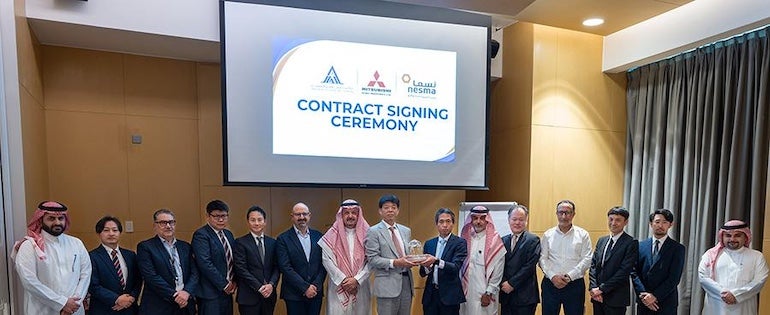
Mitsubishi Power has secured orders to supply key boiler components for a project to convert two large oil-fired power stations in Saudi Arabia to operate on both natural gas and heavy oil, supporting the kingdom’s drive to reduce the use of liquid fuels in electricity generation.
The contract covers the Jeddah South and Shuqaiq power plants on Saudi Arabia’s west coast, each with an installed capacity of around 2.9 GW across four generating units. The agreement was signed between local engineering, procurement and construction contractor Dar Al Balad Contracting and Operations (DAB) and Mitsubishi Corporation Machinery, acting as Mitsubishi Power’s authorised agent.
The conversion programme will upgrade the existing heavy oil-fired boilers to dual-fuel operation, allowing the units to switch between or co-fire natural gas and heavy oil. Mitsubishi Power originally designed and supplied the boiler equipment when the plants were built and commissioned in 2017, enabling much of the existing infrastructure to be retained during the upgrade.
The project forms part of Saudi Arabia’s wider strategy to diversify the fuel mix used in power generation. Under the Saudi Vision 2030 programme, the government is seeking to raise the share of electricity generated from natural gas to more than half of total output while reducing dependence on crude oil and heavy fuel oil.
The transition is particularly significant on the country’s west coast, where electricity demand continues to grow and a large proportion of generation capacity still relies on heavy oil. Converting existing plants is seen as a faster and more cost-effective route to lowering carbon emissions and improving air quality than replacing generating assets altogether.
Mitsubishi Power will also provide technical support during the conversion to help maintain long-term plant reliability. The work builds on the company’s role as the original equipment manufacturer for the boilers and reflects a growing market for upgrading existing thermal power stations rather than replacing them.
Fuel conversion projects are becoming an increasingly important part of decarbonisation strategies in regions where gas infrastructure is expanding but conventional thermal generation remains essential for maintaining grid stability and meeting rising electricity demand.


