
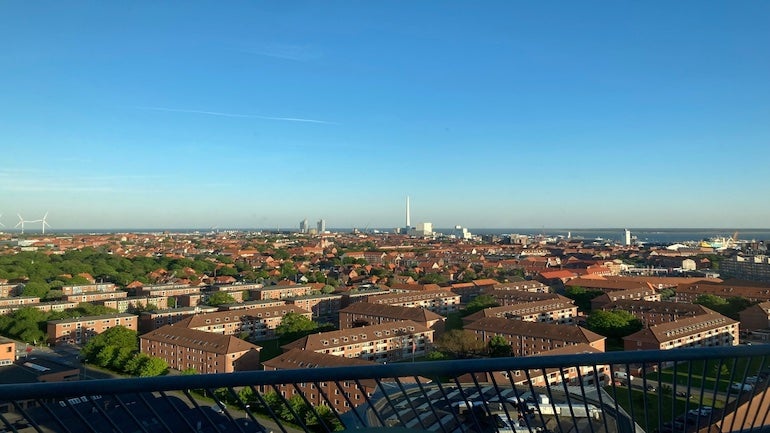
Construction has begun on Dansk Data Center 1 (DDC1), a major new data centre in Esbjerg, Denmark, designed to interact with the local energy system rather than operate solely as a large electricity consumer.
The project is being developed as a pilot for a different approach to data centre infrastructure.
DDC1 is owned by PensionDanmark, Thylander Group and Copenhagen Infrastructure Partners (CIP), through its CI Microgrid Electrification Fund. Energy-management technology will be provided by Plexar, while local utility DIN Forsyning is involved in plans to recover waste heat.
Rapid growth in artificial intelligence and digital services is increasing demand for data-centre capacity. DDC1’s developers want to demonstrate that new facilities can contribute to local energy infrastructure through flexible electricity consumption, energy storage and heat recovery.
The facility will connect to the local electricity network through grid operator N1 with an 11.5 MW connection. Its energy management system is intended to adjust consumption according to available grid capacity, while storage will help smooth operation and give the facility greater flexibility.
That approach could become increasingly relevant as data centres add large, relatively concentrated electricity loads to grids with growing shares of variable renewable generation.
“In Denmark, a large proportion of electricity generation comes from renewable energy, and with intelligent management, we can ensure that the data centre operates as efficiently as possible,” said Anders Saaby, Chief Technology Officer at Plexar.
The project also plans to make use of the heat generated by the data centre. In cooperation with DIN Forsyning, excess heat is intended for use in the district-heating network, while the cooling system will reuse water in a closed loop to reduce consumption.
The location is significant too. DDC1 is being developed at Esbjerg’s NATO port, an industrial and energy hub with established infrastructure and a growing role in Denmark’s offshore energy sector.
Karsten Uhd Plauborg, Partner at CIP and CEO of Plexar, said the port offered a strong base for a project built around local collaboration.
The development comes as Denmark seeks to expand domestic digital infrastructure alongside its renewable energy system. PensionDanmark’s Rune Gade Holm said investment in Danish data-centre capacity would support local businesses while providing a potential return for pension savers.
Anders Frich Mathiesen, CEO of Thylander Data Centers, said the ambition extended beyond the individual facility.
“Our ambition is not just to build a single data centre, but to set a new standard for how data centres can be developed as an integral part of society,” he said.
If the model works, DDC1 could offer a template for locating future high-density computing facilities alongside power, heat and other local infrastructure rather than treating electricity and waste heat as separate issues.


