
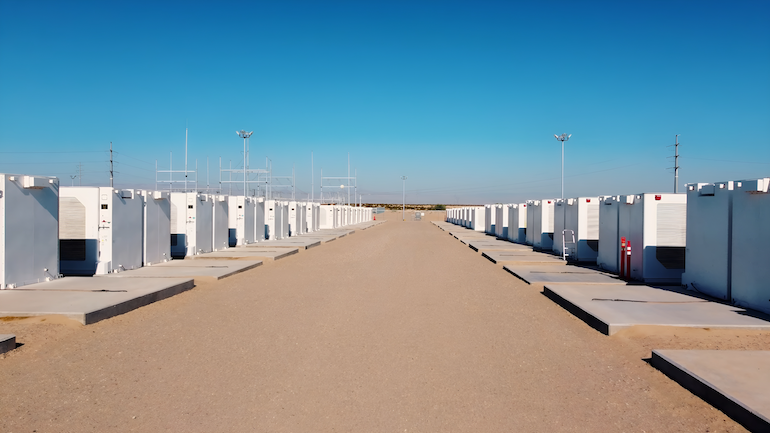
Larsen & Toubro’s renewables business has secured an order to develop three battery energy storage system (BESS) projects in the Middle East, collectively providing 6 GWh of storage capacity.
The projects, for an unnamed regional client, will each use four-hour battery systems capable of storing electricity and releasing it during periods of higher demand. L&T will also deliver the associated grid infrastructure, including pooling substations and underground cables.
The combined capacity makes the award a significant addition to the company’s growing energy storage portfolio as Middle Eastern power systems accommodate increasing volumes of renewable generation.
The systems are intended to shift electricity from periods of surplus generation to peak-demand periods. This can help reduce pressure on the grid while allowing solar and other renewable generation to be used more flexibly.
L&T said the projects would use liquid-cooled battery technology, which allows higher power density while managing operating temperatures and supporting safety and longer service life.
The company did not identify the client, project locations, contract value or expected completion dates.
The grid connection work is an important part of the packages. Rather than treating batteries as standalone assets, the projects combine storage with substations and underground cabling, reflecting the wider infrastructure required to connect large-scale storage to regional electricity networks.
L&T said the contracts would involve demanding requirements for plant performance, safety, quality, workforce mobilisation and delivery schedules.
The order comes as Gulf and wider Middle Eastern markets invest heavily in renewable generation alongside storage and transmission infrastructure. Large batteries are increasingly being considered as a means of managing the variability of solar power and shifting electricity towards evening and other high-demand periods.
For L&T, the award also expands its role beyond renewable generation into the storage infrastructure needed to integrate it.
The company described the contracts as evidence of customer confidence in its engineering and project-management capabilities, but gave no further financial details.


