
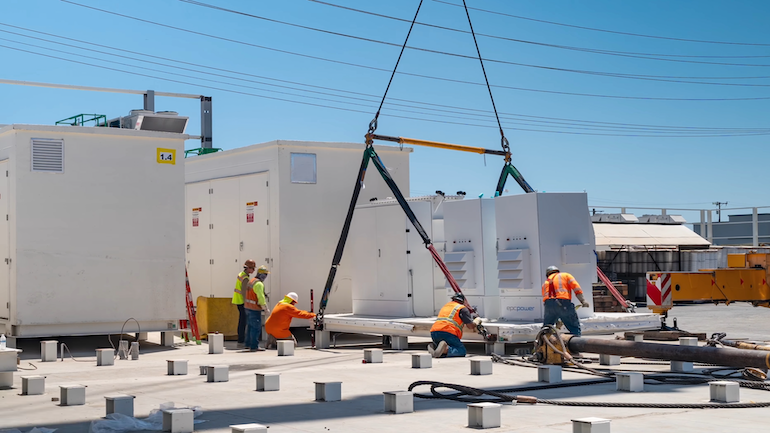
The US energy storage industry installed a record 20.2 GWh of new capacity in the second quarter of 2026, taking installations in the first half of the year to 30.8 GWh, according to the latest US Energy Storage Market Outlook from the Solar Energy Industries Association (SEIA) and Benchmark Mineral Intelligence.
The quarterly figure represents more than 10% of all energy storage capacity currently installed in the US. Utility-scale projects accounted for most of the additions, with 17.9 GWh deployed in Q2. Commercial and industrial systems contributed 1.8 GWh, while residential installations added 657 MWh.
Storage deployment is also becoming more geographically diverse. More than 74% of Q2 capacity was installed in states won by Donald Trump in the 2024 presidential election, with Arizona, Texas and Utah among the leading markets. Arizona added 6.2 GWh, the largest quarterly installation recorded by any state. Texas and California followed with 3.8 GWh and 3.6 GWh respectively.
The expansion has prompted SEIA and Benchmark to raise their forecast for US storage deployment through 2030 by 11.5% to 683 GWh. Utility-scale storage capacity has reached about 165 GWh, compared with 88 GWh at the start of 2025.
The growing deployment reflects the increasing role of batteries in managing periods of high electricity demand and integrating variable renewable generation. During periods of extreme heat, storage has supplied power when demand is highest, providing additional flexibility to grid operators and utilities.
Benchmark’s BESS and energy lead Shan Tomouk said the market was no longer concentrated in California and Texas, pointing to growing project pipelines in states including Arizona, Nevada, Oregon and Colorado.
The US is also expanding domestic battery manufacturing. Two new cell plants opened in Ohio and Tennessee during the period, alongside a 50 GWh module facility in Texas, taking domestic cell and module production capacity to record levels.
The latest figures indicate that large-scale storage is moving beyond established markets as utilities and other power buyers seek additional capacity to support reliability and rising electricity demand.


