
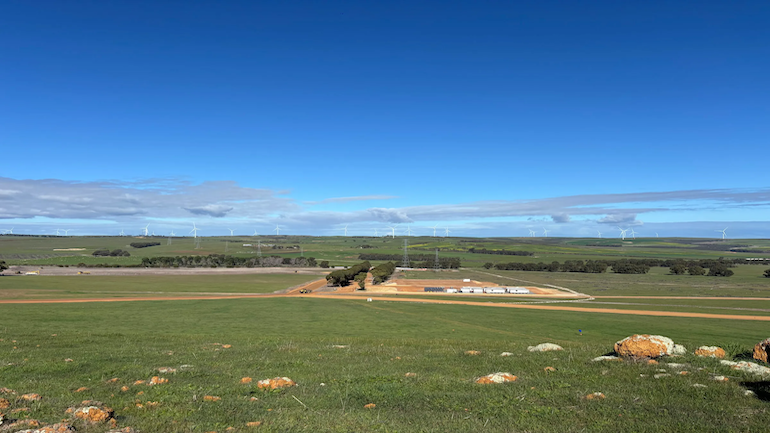
Atmos Renewables has selected energy storage integrator Valo to deliver the 400 MW/1,600 MWh Teebar Battery Energy Storage System (BESS) in Queensland, Australia. Located in the Fraser Coast region beside Teebar Creek Substation, the four-hour battery project is expected to enter commercial operation in late 2028.
Teebar is among the largest battery storage projects committed for construction in Queensland. It is intended to support grid stability and flexibility as renewable generation increases across Australia’s National Electricity Market (NEM).
The project has secured Generator Performance Standards approval for grid-forming operation, enabling the battery to provide grid-support functions beyond energy storage. Valo said its experience with grid-forming technology and grid connection testing would support the project’s performance and reliability requirements.
The development is also intended to meet requirements associated with Australia’s Capacity Investment Scheme, which aims to encourage investment in reliable, low-emissions electricity infrastructure.
Teebar will use Valo’s GridSolve Quantum2 energy storage system and GEMS software for energy management and power plant control. A long-term service agreement will cover maintenance, remote operational support, software updates and performance monitoring, alongside performance and availability guarantees.
“Teebar BESS is an important project for Atmos Renewables and will play a significant role in supporting Queensland’s growing renewable energy system,” said Nigel Baker, chief executive of Atmos Renewables. He said the company was pleased to partner with Valo as the project moves towards construction.
For Valo, the contract is an early milestone following the launch of the joint venture between Wärtsilä and RCT Solutions. The company said Teebar brings its Australian energy storage portfolio to more than 7.6 GWh.
The project adds to Queensland’s large-scale storage pipeline as Australia seeks to integrate more variable wind and solar generation while maintaining electricity system reliability.


