
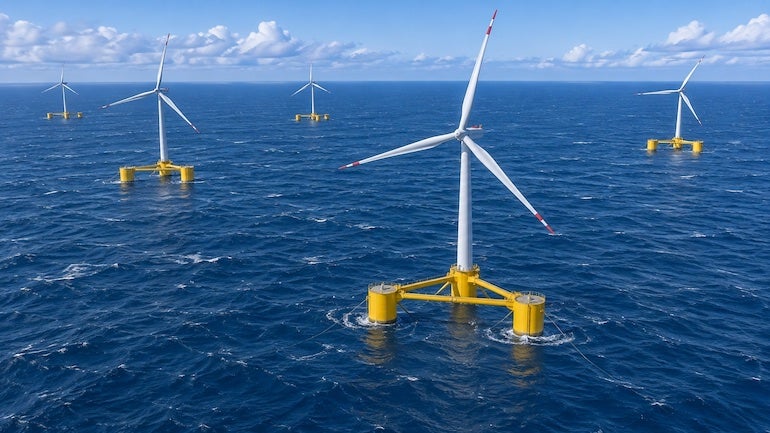
Portugal and the UK are bringing together offshore wind developers, policymakers and technology companies in Lisbon on 2 December to examine how bilateral cooperation could accelerate the commercial development of floating offshore wind.
The seminar, Towards a Shared Vision for Floating Offshore Wind, is being organised by WavEC Offshore Renewables and the British Embassy in Lisbon. It comes as both countries look to develop their offshore wind industries and establish the supply chains, infrastructure and investment needed to support larger-scale projects.
The event will feature contributions from organisations including The Crown Estate, Ocean Winds, ORE Catapult, Global Wind Energy Council (GWEC), RenewableUK, Carbon Trust and TechnipFMC, alongside Portuguese industry and government representatives.
The timing reflects growing momentum in the sector. RenewableUK’s October 2026 EnergyPulse report puts global operational floating wind capacity at 382 MW, a 38% increase over the previous 12 months. The UK has the world’s largest development pipeline, at 28.4 GW, while Portugal is targeting 2 GW of offshore wind deployment by 2030, with longer-term potential estimated at around 10 GW.
However, converting development pipelines into operating projects remains a significant challenge. Auction design, regulatory certainty, grid connections, port facilities and access to finance will all influence the pace of deployment.
Marco Alves, CEO of WavEC Offshore Renewables, said: “Portugal has a significant opportunity to establish itself in the emerging floating offshore wind market, but unlocking this potential will take more than ambitious targets.”
He added that cooperation with the UK could help align industrial capabilities, share knowledge and strengthen supply-chain connections.
The programme will examine investment opportunities, deployment conditions, technology development and bilateral industrial cooperation. A closing roundtable will seek to identify practical priorities for the next three to five years.
The event also reflects growing industry calls for coordinated action. Recent research by ORE Catapult has highlighted the potential for standardisation, improved financing and sustained deployment to reduce floating wind costs.
For both countries, the challenge is increasingly how to turn offshore wind ambitions into commercially viable projects and a competitive industrial sector.


