
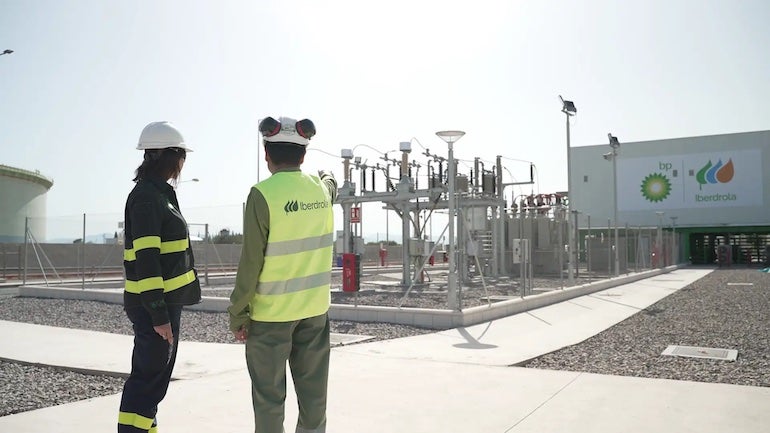
bp and Iberdrola have started operations at a 25 MW green hydrogen plant at bp’s Castellón refinery in Spain, with the facility expected to produce around 2,800 tonnes of renewable hydrogen a year.
Developed by the companies’ 50:50 joint venture Castellón Green Hydrogen and operated by bp, the plant is currently the largest operating green hydrogen facility in Spain.
Iberdrola supplies 170 GWh of renewable electricity annually to the plant under a power purchase agreement, sourced from its Spanish wind and solar farms.
The hydrogen will be used directly in the Castellón refinery, replacing part of the grey hydrogen currently required for refining processes. The companies estimate this will avoid around 23,000 tonnes of CO2 emissions each year and reduce the refinery’s associated carbon costs.
Hydrogen is used in several refinery processes, including treating fuels and removing impurities. Using hydrogen produced from renewable electricity instead of conventional hydrogen made from fossil fuels therefore targets emissions within an existing industrial process rather than creating a separate hydrogen market.
Around 25 Spanish companies participated in the project, supplying equipment or supporting construction, according to the partners. The project also includes the Instituto Tecnológico de la Energía (ITE).
The initiative received €15m in funding through Spain’s renewable hydrogen innovation programmes, managed by the Institute for Energy Diversification and Saving (IDAE) and financed through the European Union’s NextGenerationEU programme.
Brenda Stout, bp’s senior vice-president for refining, terminals and pipelines, said the start-up of the plant “further improves the competitiveness” of the Castellón refinery.
Iberdrola España chief executive Mario Ruiz-Tagle said the project demonstrated how renewable electricity and electrification could reduce emissions from industrial processes while supporting industrial activity.
The plant provides a direct industrial application for green hydrogen, linking renewable power generation with an established refinery demand and avoiding the need to develop a separate hydrogen distribution system for its initial output.


