Datacentre developers the world over are desperate to find power to run massive “AI factories.” They have largely gobbled up whatever is available from the grid. When they turned their attention to gas turbines, they ate up almost all of the available inventory for anywhere from three to seven years. More recently, a few developers have had success in the secondary market for used or refurbished turbines. Gas engines, fuel cells, battery energy storage systems (BESS), are also enjoying strong orders, and, looking to the longer term, there’s growing interest in small modular nuclear power plants.
“Overall power demand is rising rapidly, driven by the explosive growth of datacentres and AI workloads, as well as broader electrification across society,” said Arndt Zimmermann, Vice President Sales of the Steam Turbine and Generator Business, Siemens Energy.
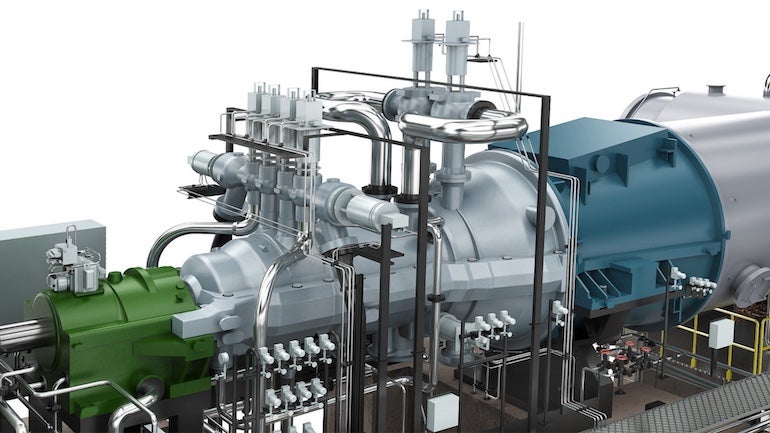
As the order books filled up and lead times lengthen, a few smart developers have turned their attention to an old and largely neglected way of offering power: using a traditional boiler to feed steam to a steam turbine. This approach is widely used by many sectors of industry. It has been around for more than 100 years and can trace its origins back to Charles Parsons in the nineteenth century and perhaps even further back, to James Watt.
But if it works, it works. And with lead times for boilers and steam turbines much shorter than for gas turbines, at least for now, suppliers have developers knocking on their doors demanding boilers and steam turbines.
Siemens Energy orders
One beneficiary has been Siemens Energy. Like many gas turbine OEMs, it has experienced a surge of orders for its gas fuelled machines. From large HL models of nearly 600 MW to the SGT-800 of up to 62 MW, its entire gas turbine portfolio is in high demand.
Its steam turbines, too, are now attracting interest from large datacentre developers as well as hyperscalers such as Google, Microsoft, and Amazon. One contender is Siemens Energy’s SST-700/900 steam turbine, which has a power output of up to around 250 MW.
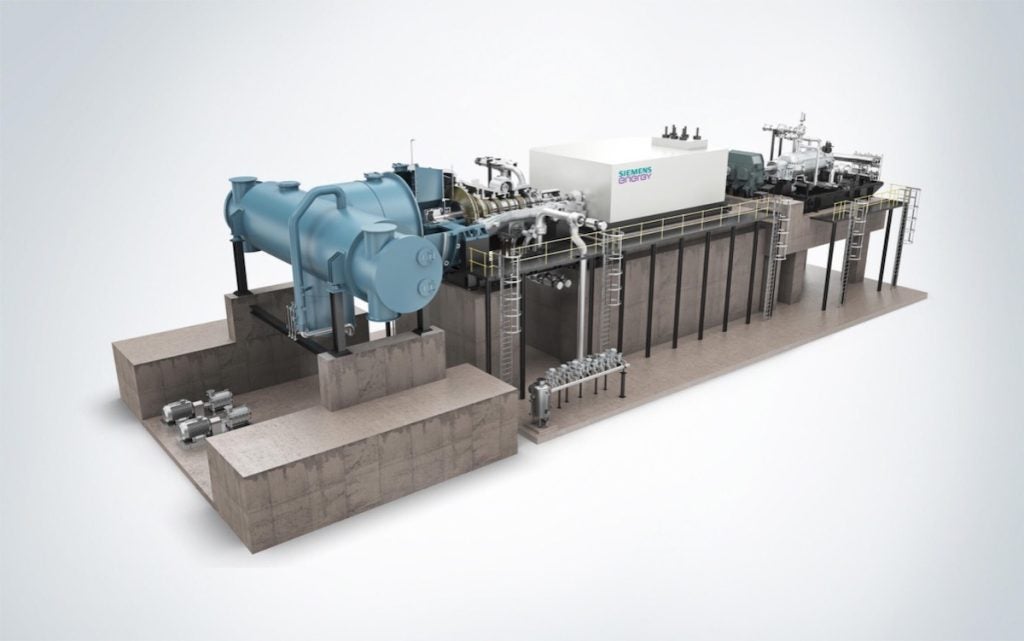
“We are seeing rising interest in deploying steam turbines across many different applications,” said Zimmermann. “This includes deploying steam turbogenerators paired with natural gas fired boilers, which offers a viable pathway to bring new power generation online.”
Siemens Energy’s steam turbogenerator business includes manufacturing facilities in Europe, Asia, and the Americas. Zimmerman noted that this gives the company the flexibility to balance production loads across regions and meet any sudden upswing in steam turbine orders. Lead times vary from unit to unit and depend on project specifics. It typically takes more than a year to make a steam turbine. Predictably, smaller units (50 MW or less) have the shortest manufacturing time, while bigger ones take longer to build, test, and deploy.
Pairing steam turbines with boilers
The other element is the packaged boiler. Rentech Boiler Systems of Abilene, Texas, has typically offered boilers for industrial applications or heat recovery steam generators (HRSGs) for power generation. But more recently, there have been increasing numbers of datacentre enquiries.
“Datacentres are attracted to the simple and proven method of power generation provided by natural gas fuelled boilers and steam turbines,” said Gerardo Lara, Vice President of Boiler Sales at Rentech Boiler Systems. “And with lead times for packaged boilers of a year or less, demand is growing.”
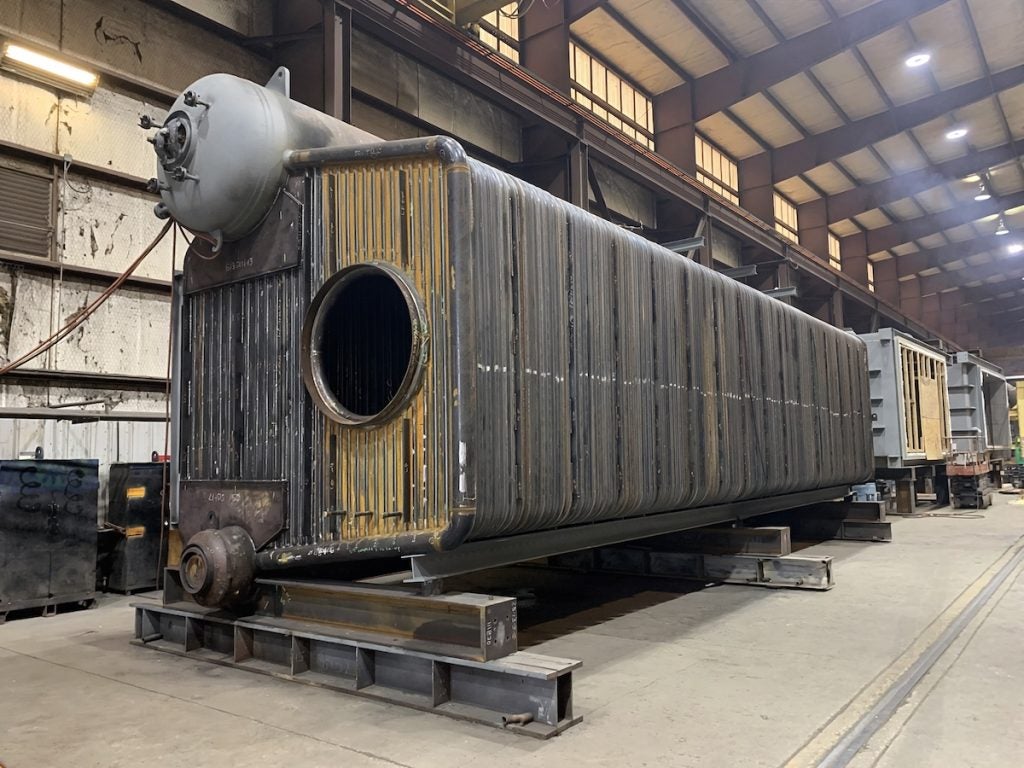
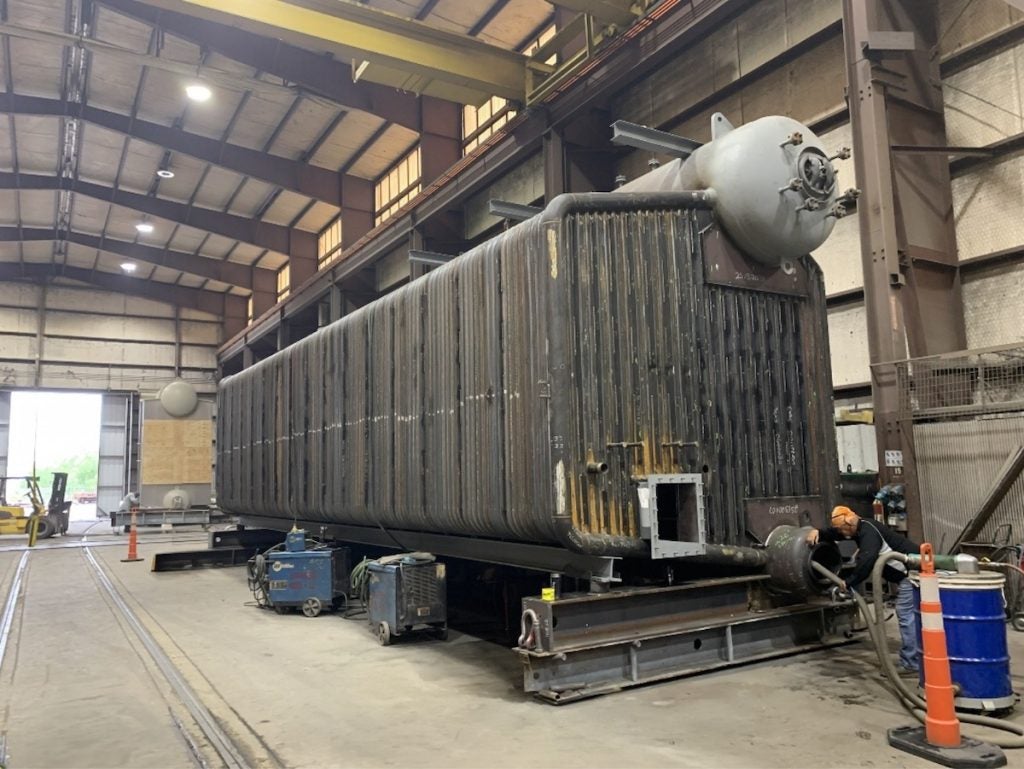
Packaged boiler production in Rentech’s manufacturing shop, Abilene, Texas. Photo: D Robb
Additionally, there is a wealth of boiler suppliers across the world so it could take a while for rampant datacentre demand for power to exhaust the supply chain. Each boiler manufacturer has its own specialty. Some gravitate toward boilers that could accompany large steam turbines. Others have carved out a regional niche or prefer to concentrate on smaller plants.
Rentech, for example, focuses on boilers ranging from 20 000 pounds per hour of steam to 650 000 pounds per hour at pressures from 200 to 2000 psi. Such models would be ideally suited to steam turbines in the 20 MW to 40 MW range. Modularised designs can accommodate turbines up to 50 MW.
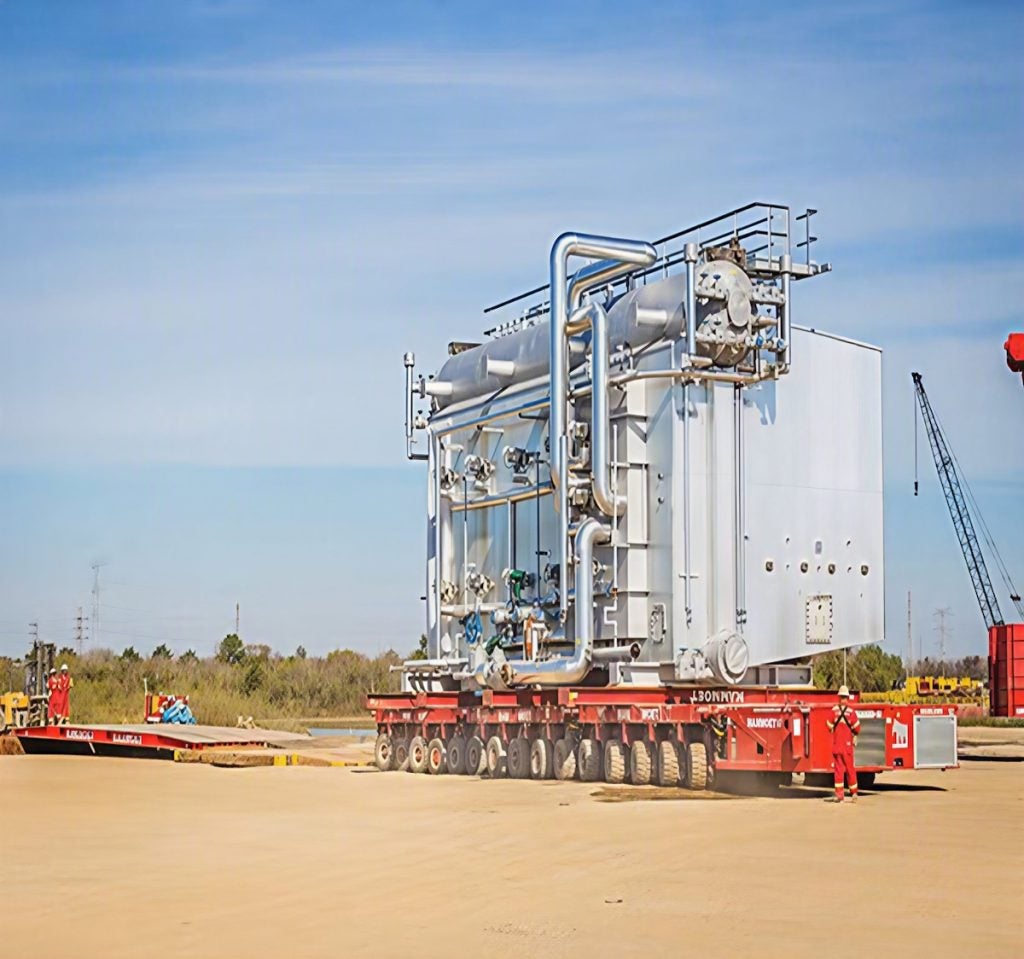
The company’s fired watertube models are built with water-cooled, full membrane wall construction and are designed to keep maintenance needs low. Its designs typically include large furnaces to optimise circulation, transfer heat efficiently, and supply steam while staying within emissions limits. Rentech has been beefing up its manufacturing capabilities due to datacentre demand for both boilers and HRSGs.
“The packaged boiler is the workhorse of a great many industries and would perform well in the datacentre market,” said Lara. “Many datacentres are expected to order packaged boilers and steam turbines over the next couple of years.”
Early adopter
One of the earliest adopters of the boiler/steam turbine configuration is datacentre developer and operator Applied Digital. It has two AI datacentres running in North Dakota, and several more being added in that state. The company is ordering 1.2 GW of steam turbines from Siemens Energy to be twinned with boilers.
“The use of a boiler with a steam turbine is a proven approach to power generation that can be delivered faster than other generation solutions,” said Wes Cummins, Chairman and Chief Executive Officer of Applied Digital. “This enables us to support the next generation of AI infrastructure.”
A natural-gas-fired boiler will operate with a 300 MW steam turbine at four different sites. The Siemens Energy double casing SST 800/500 steam turbogenerators to be deployed are not off the shelf products; their design is tailored for each project based on the required power output, available steam parameters and other site specific conditions. The SST-800/500 is typically used for projects in the range 200-350 MW, and is designed to achieve high efficiency levels, contributing to optimised fuel utilisation, and overall plant performance, added Arndt Zimmermann. Delivery of the steam turbines is expected by the end of 2028, which fits in with the datacentre construction schedule.
Applied Digital’s CEO also wants gas turbines. But he doesn’t expect to receive any until 2032 or 2033 due to the steadily growing order backlog for some models. He has a plan to eventually convert his power generation facilities into full-blown combined cycle power plants. He explains that he needs the power as fast as possible and will need more power at these sites soon after. Therefore, the boilers will be configured to work in tandem with HRSGs as part of a combined cycle power generation system.
Shorter lead times
With such long delays for gas turbines, the packaged boiler/steam turbine combo could fill the gap for some datacentre developers. Both boiler and turbine are based on proven technology and are capable of plenty of capacity. Delivery times are also attractive to those engaged in a frantic race to bring AI datacentres online as soon as possible.
“Lead times for a package boiler are typically year or less,” said Lara.


