
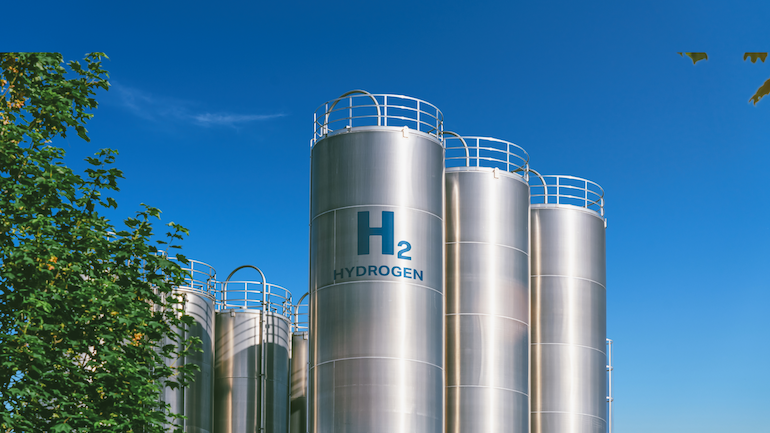
German renewable energy developer ABO Energy has agreed with the City of Oulu to advance plans for a green hydrogen production facility of up to 600 MW in northern Finland.
The cooperation agreement follows a site reservation agreement signed by the two parties in 2025. It establishes a framework for collaboration on project development, land-use planning and permitting for the proposed facility.
The project is planned for the Pyyryväinen green transition zone in Oulu and will be developed by ABO Energy’s Finnish subsidiary, ABO Energy Suomi. The electrolyser capacity is expected to be installed in two or three phases, ultimately reaching as much as 600 MW.
ABO Energy is also assessing whether the site could produce synthetic methanol and sustainable aviation fuel (e-SAF), potentially allowing hydrogen generated at the facility to be converted into products for sectors where direct electrification is more difficult.
The project remains at the development stage. ABO Energy said a final investment decision will follow further technical and commercial assessments, meaning the full 600 MW capacity has not yet been committed for construction.
Oulu is emerging as a significant centre for planned hydrogen production in Finland. The city says the region has the country’s largest pipeline of proposed clean hydrogen projects in the Baltic Sea region, supported by its renewable power resources and industrial base.
Electricity availability will be a key factor for a project of this scale. Electrolysers require substantial quantities of electricity to produce hydrogen, making access to competitively priced renewable power important to the economics of green hydrogen production.
The Oulu region is described by the city as Finland’s largest area for renewable power generation, while Finland generally benefits from relatively low electricity prices compared with other European markets.
For ABO Energy, the agreement provides a route to progress site and permitting work before the company makes an investment decision. If developed at its full planned scale, the facility would rank among Finland’s larger proposed electrolyser projects and could also provide feedstock for downstream e-fuel production.
The project adds to Oulu’s expanding hydrogen development pipeline as Finland seeks to combine renewable electricity generation with new industrial demand and low-carbon fuel production.


