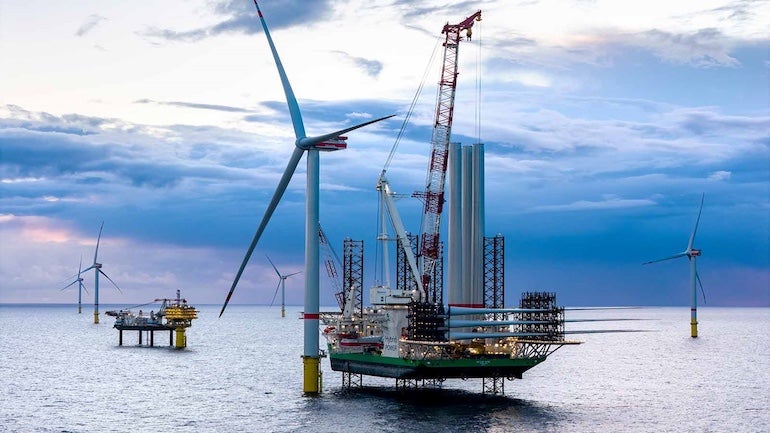
Electricity has been generated for the first time at the 1.6 GW Nordseecluster offshore wind project, marking a key step in one of Germany’s largest offshore wind developments currently under construction.
The milestone comes just weeks after the first turbine was installed at the North Sea site. Nordseecluster A, the first phase of the project, is expected to be fully connected to the grid in early 2027, while the second phase is planned to enter operation in 2029.
The project is being developed by RWE, which holds a 51% stake, and Norges Bank Investment Management, which owns the remaining 49%. RWE is leading construction and will operate the wind farms throughout their lifetime.
The first turbine’s output has now reached the German electricity network, beginning the process of bringing the wider project online. Nordseecluster A will eventually comprise 44 turbines with a combined capacity of 660 MW. Electricity will be collected through two offshore substations before being transferred via the transmission system to the mainland.
Sven Utermöhlen, chief executive officer of RWE Offshore Wind, said: “The Nordseecluster, RWE’s largest offshore wind project currently under construction, is progressing exactly as planned, with the first turbine now generating electricity and feeding power into the German grid.”
He added: “This milestone showcases the exceptional performance of our teams and supply chain partners.”
Once complete, Nordseecluster will provide around 6.5 TWh of renewable electricity each year, supporting Germany’s energy security and industrial decarbonisation efforts. RWE plans to use the generated power to develop tailored energy solutions for industrial customers seeking to reduce emissions.
The project’s second stage, Nordseecluster B, will add a further 900 MW of capacity. Manufacturing of some components has already started, with foundation installation expected next year and turbine installation scheduled for 2028.
The development will feature 60 Vestas turbines in its second phase, underlining the scale of the offshore supply chain effort required to deliver the full 1.6 GW project.
With construction progressing offshore, Nordseecluster is moving from planning and installation into the operational phase, providing an early example of how large-scale wind projects are being integrated into Europe’s changing power system.


