
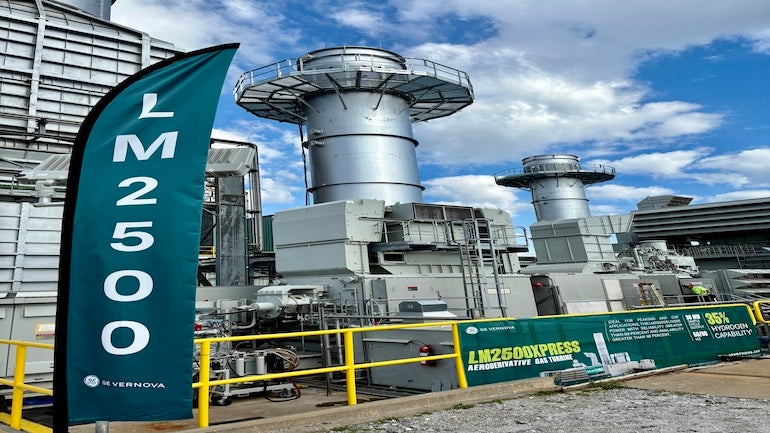
GE Vernova has validated its LM2500XPRESS aeroderivative gas turbine package for operation with fuel blends containing up to 50% hydrogen and completed testing of the LM6000VELOX package for 100% hydrogen operation.
The tests were conducted at GE Vernova’s dedicated hydrogen testing facility at its Global Technology Center in Greenville, South Carolina. The company announced the results during its COP31 programme in Antalya.
The LM2500XPRESS was validated in a Dry Low Emission (DLE) configuration for hydrogen blends of up to 50%. GE Vernova said the package can reach full power in five minutes or less, providing a potential route for operators to introduce hydrogen while retaining the turbine’s fast-start characteristics.
Separately, testing of the LM6000 platform in a Single Annular Combustion (SAC) configuration was completed to validate its capability to operate on 100% hydrogen. GE Vernova said the testing addressed combustion stability and other technical challenges associated with hydrogen fuel.
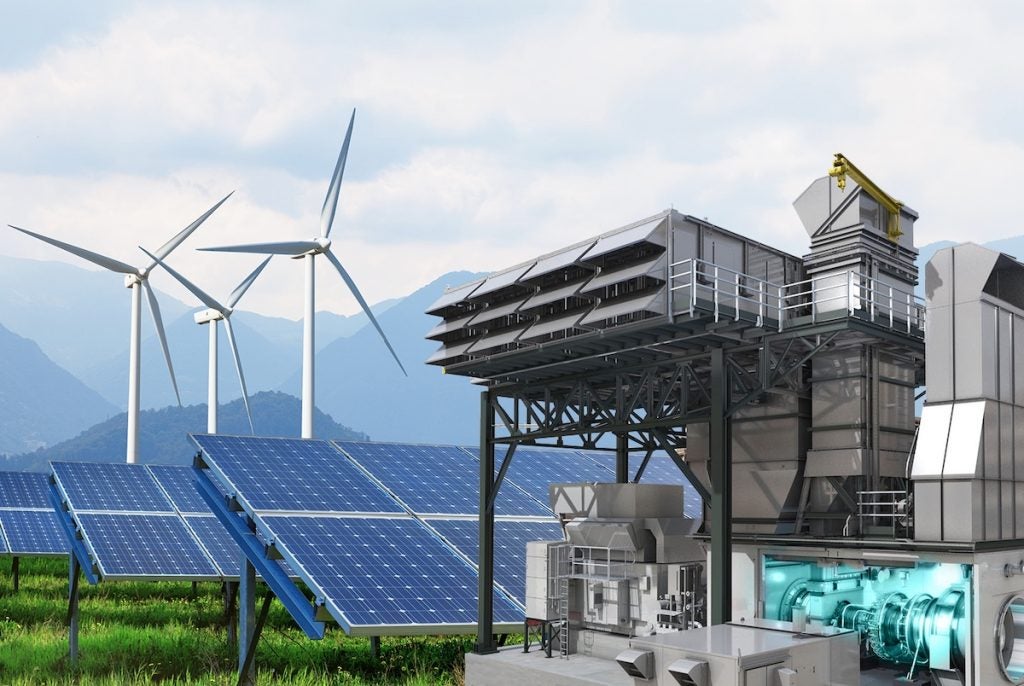
The company said its aeroderivative gas turbine fleet has accumulated more than 11 million operating hours on hydrogen and hydrogen-blended fuels. More than 120 GE Vernova gas turbines have operated, or continue to operate, with hydrogen-containing fuels, according to the company.
The LM2500 has more than 1,150 units sold and over 200 million operating hours, while GE Vernova has an installed and shipped base of almost 1,350 LM6000 units across approximately 60 countries.
The Greenville testing facility forms part of a broader investment in the site announced in 2025. GE Vernova said the facility is intended to increase testing capacity and shorten development times for new turbine capabilities, including hydrogen applications.
The company also said its HA-class heavy-duty turbines, including the 7HA and 9HA, can currently operate with hydrogen blends of up to 50% by volume with natural gas using the DLN2.6e combustion system.
GE Vernova said hydrogen-capable turbines could allow existing gas-fired generation to operate on fuels with lower carbon intensity, subject to fuel availability and required equipment modifications.


