
GIGA Storage has secured €260m in debt financing for its 350 MW Albatross battery energy storage project near Neuenkirchen in Lower Saxony, Germany. Financial close took place on 23 October 2026, with construction scheduled to start in early 2027 and commissioning expected in early 2029.
The financing is being provided by a consortium of seven international banks: ABN AMRO, Hamburg Commercial Bank, ING, Rabobank, Siemens Bank through Siemens Financial Services, SMBC and Société Générale.
Albatross will have 350 MW of power output and 1,400 MWh of storage capacity, equivalent to four hours of discharge at rated output. The facility will connect directly to transmission system operator Amprion’s 380 kV grid at the Merzen substation. The connection agreement was signed on 14 October 2026.
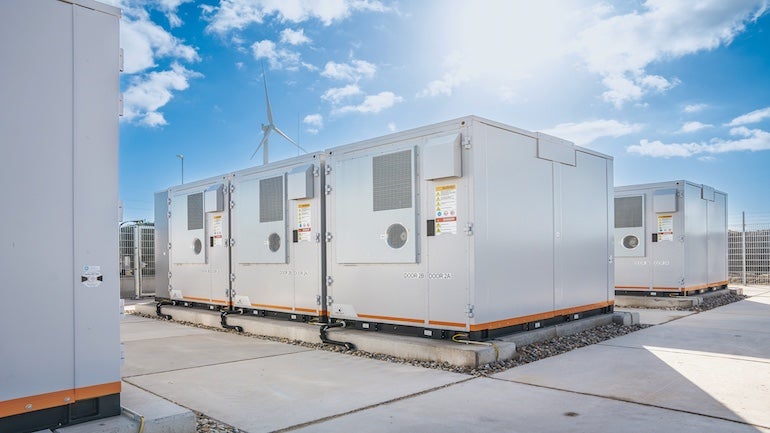
The project comprises 264 battery containers, 96 medium-voltage transformers and two high-voltage transformers. CATL is responsible for engineering, construction and maintenance, working with European subcontractors.
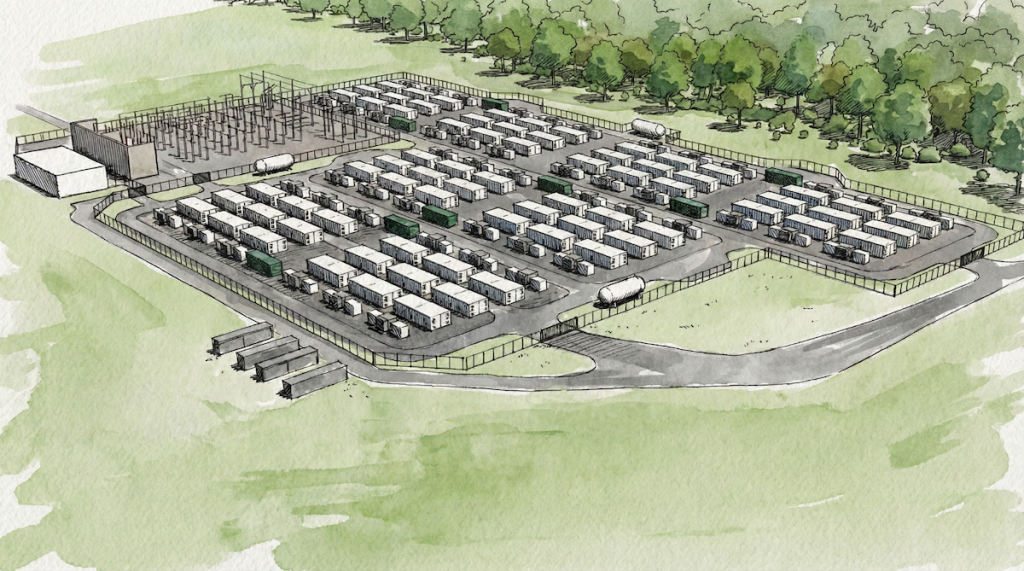
GIGA Storage said permits, land agreements and supplier contracts had been finalised ahead of financial close. The project also includes plans for approximately 12 hectares of ecological compensation measures near the site.
“Albatross demonstrates that large-scale energy storage is indeed moving from plan to reality,” said Amprion chief executive Christoph Müller. He said battery storage could help balance electricity generation and consumption while improving flexibility and security across the power system.
Albatross is GIGA Storage’s first project in Germany. Together with its Leopard project in the Netherlands and Green Turtle in Belgium, it brings the company’s storage capacity under construction across the three countries to approximately 1.4 GW and 5.6 GWh.
GIGA Storage aims to have more than 2 GW of operational storage capacity by 2030, expanding its presence in North-West Europe as battery storage is increasingly deployed to support grid flexibility and address congestion.


