
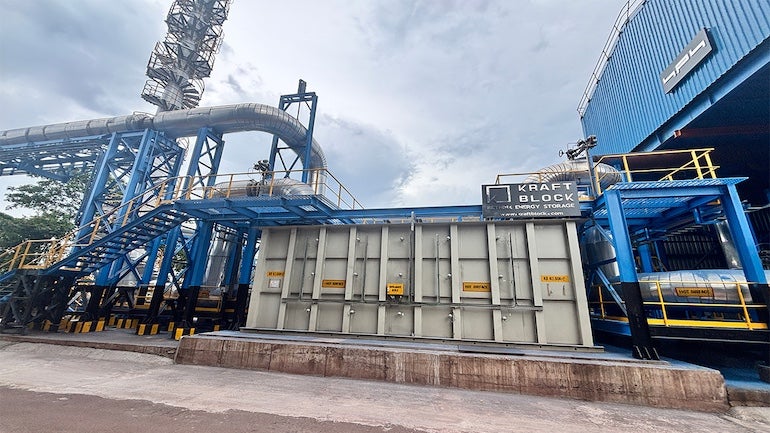
Tata Steel, in partnership with German energy transition technology startup Kraftblock GmbH, is approaching almost a year of successful operations with a 20 MWh thermal energy storage system at the Jamshedpur steelworks’ Sinter Plant #3, demonstrating a scalable pathway to low-carbon steel production.
Operational since May 2025, the heat battery captures high-temperature waste heat from the sintering process – where iron ore fines are agglomerated for blast furnace feed – that would otherwise be vented into the atmosphere. The recovered heat is stored and later used to preheat process water, directly displacing fossil gas consumption and improving overall plant efficiency.
The installation consists of two Kraftblock units with a combined charging capacity of 1.5 MW and discharge capacity of 1.8 MW. The system is projected to eliminate up to 110 GWh of gas use annually and reduce CO2 emissions by approximately 22,000 metric tons.
The project was implemented under Tata Steel’s TomorrowLAB startup programme, which identifies and pilots innovative technologies to address sustainability challenges across its operations.
Chaitanya Bhanu, Vice President Operations at Tata Steel Jamshedpur, described the pilot as proof of a scalable route to energy-efficient steelmaking. Kraftblock CEO Martin Schichtel emphasised the broader potential for applying thermal storage across steel plants, from sinter coolers to furnace exhaust systems and flaring applications.
The initiative aligns with Tata Steel’s broader decarbonisation roadmap, with plans to replicate the solution across other high-temperature processes.


