
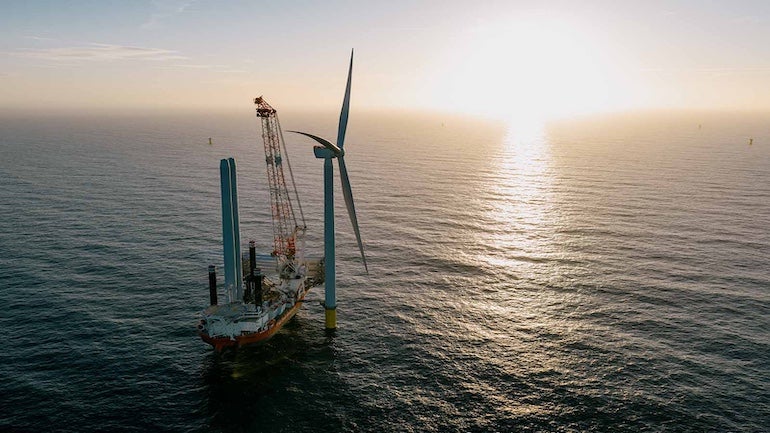
RWE has installed the first offshore wind turbine at its Thor offshore wind farm in the Danish North Sea using a reduced‑CO2 steel tower and recyclable rotor blades, marking one of the first large‑scale applications of low‑carbon components in an 11 GW‑scale offshore scheme. The unit is part of the 1.1 GW Thor project, which is now feeding initial power into the Danish grid.
Thor will ultimately consist of 72 turbines, each with up to 15 MW of capacity, with installation scheduled to be completed by the end of 2026. RWE plans to deploy 36 Siemens Gamesa GreenerTower towers, made from steel certified to emit no more than 0.7 tonnes of CO2‑eq per tonne of steel, and fit 120 recyclable blades on 40 turbines. The recyclable design uses a resin that allows composite materials to be separated and reused in applications such as automotive castings and consumer goods components.
The developer said offshore construction remains on track, with all foundations and the offshore substation installed in 2025 and turbine erection progressing on schedule. A new service building at the Port of Thorsminde will support operations and maintenance of the farm.
RWE Offshore Wind CEO Sven Utermöhlen described the choices as a step toward a more circular offshore wind value chain, noting that the project already features one of the lowest lifecycle carbon footprints among power generation technologies.
Thor lies approximatel 22 km off Thorsminde on Jutland’s west coast; RWE holds 51% and leads construction and operations, while Norges Bank Investment Management owns the remaining 49%.
Full commercial operations are expected by the end of 2027.


