
The administration is said to be “strengthening grid reliability and national security by reinvigorating the American coal industry” and “unleashing beautiful, clean coal after years of attack.”
Declaring a “national energy emergency” back in January 2025, the Trump administration set about reversing what it called “the war on American coal” by “stopping the premature shutdown of coal fired power plants, expanding coal infrastructure to improve grid reliability, lower energy costs, and supporting American coal workers.”
4 June announcements
On 4 June 2026, the Department of Energy announced its intention to provide support to a further 17 coal fired power plants and one coal export facility. With these projects, the US DOE says it will have saved/supported a total of some 45 coal fired power plants, amounting to more than 40 GW of installed capacity. As a result, “at least 42 coal mines will likely remain in operation.”
Four of the projects announced on 4 June will receive a total of up to $350 million via the US Department of Energy’s Restoring Reliability: Coal Recommissioning and Modernization initiative.
Remarkably, two of the four projects are feasibility studies looking towards construction of new coal fired power plants (something not seen in the USA for over a decade):
- Alaska CCUS coal commissioning project. Terra Energy Center Corporation (Anchorage, Alaska) is to assess the viability of commissioning a new 1250 MW power plant with integrated carbon capture. Funding: DOE $89 000 000; non-DOE $101 375 155; total $190 375 155.
- TerraSpark WV Energy Campus. TerraPurus, doing business as “TerraSpark Inc” (Mt Storm, West Virginia), is to undertake scoping and design for a 1600 MW “next-generation” coal fired power plant with integrated carbon capture, to be located at the West Virginia Energy Campus. Funding: DOE $18 500 000; non-DOE $21 462 500; total $39 962 500.
The other two projects of the four announced on 4 June as recipients of funding via the US DOE’s Restoring Reliability: Coal Recommissioning and Modernization initiative involve retrofit of existing coal fired power plants:
- AES Puerto Rico, life extension and CCUS feasibility. AES Puerto Rico (Guayama, Puerto Rico) plans to retrofit and modernise the existing 510 MW Guayama coal fired plant “to ensure continued operation.” The scope includes a front end engineering design study for a post combustion carbon dioxide capture system. Funding: DOE $164 500 000; non-DOE $655 400 000; total $819 900 000.
- AES Warrior Run recommissioning. AES Warrior Run (Cumberland, Maryland) plans to recommission the 205 MW Warrior Run generating plant, which ceased operation in 2024. The project focuses on reactivating existing equipment through “routine maintenance and repairs.” The project scope will include assessing the feasibility of adding a carbon capture component to the plant. Funding: DOE $78 000 000; non-DOE $78 000 000; total $156 000 000.
4 June 2026 also saw the Energy Department announce that it will support 13 coal plants and coal export infrastructure with a $500 million investment provided from Defense Production Act (DPA) funding. These DPA funded projects are as follows:
- Reliable, economical, and local advancement in modernized coal (RECLAIM-C). Alliant Energy Corporation (Columbia County, Wisconsin) is modernising its Columbia Energy Center, a coal fired plant in Pacific, Wisconsin. The initiative aims to “maintain dependable baseload service” and enhance the efficiency and environmental performance of the existing units. Funding: federal $19 000 000; non-federal $29 500 000; total $48 500 000.
- AEPCO ST3 modernization project. Arizona Electric Power Cooperative, Inc (Cochise, Arizona) is embarking on a comprehensive modernisation and resiliency program at the Apache generating station. Funding: federal $20 826 000; non-federal $32 574 000; total $53 400 000.
- Antelope Valley station coal modernization. Basin Electric Power Cooperative (Mercer County, North Dakota) proposes modernisation of two coal fired units at the Antelope Valley power plant. Funding: federal $27 441 000; non-federal $42 559 000; total $70 000 000.
- East Bend coal reliability assurance initiative. Duke Energy Kentucky (Boone County, Kentucky) is undertaking upgrades at the East Bend coal fired power station. The upgrades will improve the plant’s operational flexibility, enhance overall efficiency, and boost generation capacity. Funding: federal $33 400 000; non-federal $50 043 088; total $83 443 088.
- Roxboro 2 & 3 coal reliability assurance initiative. Duke Energy Progress, Inc (Person County, North Carolina) will modernise and enhance the operational capabilities of the Roxboro coal fired plant. Funding: federal $28 400 000; non-federal $44 273 513; total $72 673 513.
- EKPC DOE coal recommissioning and modernization. East Kentucky Power Cooperative, Inc (Maysville, Kentucky and Pulaski, Kentucky) plans to modernise coal fired units at the H.L. Spurlock and and John Sherman Cooper generating stations. Each unit will undergo significant upgrades that will extend operational life, improve dispatch flexibility, and help ensure grid stability. Funding: federal $90 600 000; non-federal $271 800 000; total $362 400 000.
- MORE Oklahoma (Modernizing Oklahoma’s Rural Energy). Grand River Dam Authority (Chouteau, Oklahoma) will modernise its coal fired unit at the Grand River Energy Center, extending its operational life. Funding: federal $28 518 000; non-federal $48 061 000; total $76 579 000.
- Modernizing the Merom coal fired power station: effluent limitation guideline modernization project. Hallador Power Company (Merom, Indiana) is planning to modernise its Merom coal fired power station. Funding: federal $27 200 000; non-federal $42 491 006; total $69 691 006.
- Sooner DCS modernization project. Oklahoma Gas and Electric Company (Red Rock, Oklahoma) is modernising the distributed control system and associated field devices at the Sooner power plant. Funding: federal $22 513 000; non-federal $35 212 674; total $57 725 674.
- Flint Creek coal plant modernization and resiliency program. Southwest Electric Power Company (Gentry, Arkansas) is embarking on a significant modernisation and resiliency programme at its Flint Creek coal fired plant in Gentry, Arkansas. The project involves upgrades that will reduce fuel requirements, improve plant operational efficiency and reliability, increase power generation capacity, and extend asset life, ensuring the plant’s continued role in providing grid stability and energy supply for Northwest Arkansas. Funding: federal $29 814 400; non-federal $44 721 600; total $74 536 000.
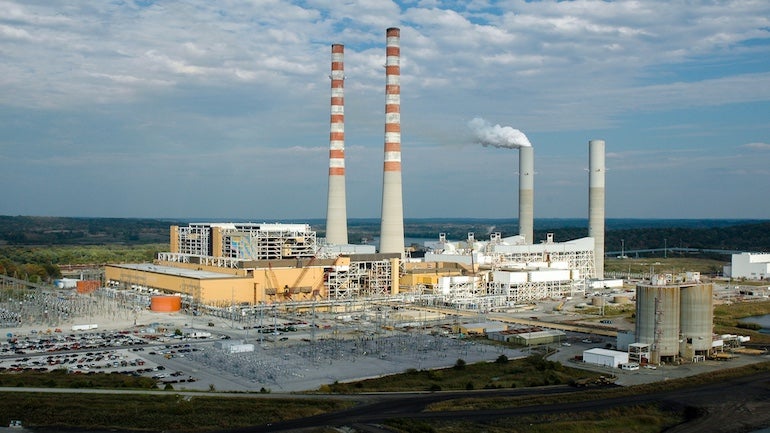
- TVA coal revitalization initiative. Tennessee Valley Authority (Stewart County, Tennessee) is embarking on a comprehensive coal revitalisation initiative at its Cumberland fossil fuelled power plant (see photo p10). This project aims to restore reliability, enhance efficiency, and extend the operational life of coal fired assets to meet regional demand for dispatchable power. Funding: federal $46 287 600; non-federal $69 431 400; total $115 719 000.
- Mitchell mechanical draft cooling tower modernization project. Wheeling Power Company (Moundsville, West Virginia) plans to modernise the Mitchell coal fired power plant. This upgrade will enhance regional grid reliability, reduce outage risk, and improve overall system efficiency, “contributing to regional energy affordability.” Funding: federal $51 000 000; non-federal $107 600 000; total $158 600 000.
- West Gateway Terminal project. The West Gateway Terminal project, spearheaded by Oakland Bulk and Oversized Terminal (OBOT), aims to expand coal export capacity at a strategic bulk commodities export terminal location. Funding: federal $75 000 000; non-federal $156 773 000; total $231 773 000.
Previous awards
Previously, in February 2026, the Department of Energy committed $175 million under the Restoring Reliability: Coal Recommissioning and Modernization initiative to six upgrade projects at existing coal fired power plants:
- Amos and Mountaineer coal plant modernization and resiliency program. Appalachian Power Company (New Haven, West Virginia and Winfield, West Virginia). Funding: DOE $34 592 797; non-DOE $53 107 203; total $87 700 000. This project will see upgrade of coal fired units at the Mountaineer power plant in New Haven, West Virginia, and at the John E. Amos power plant in Winfield, West Virginia. Both plants are owned and operated by Appalachian Power Company (APCO), a subsidiary of American Electric Power (AEP), and “have strong track records of executing capital projects safely and efficiently.” At the Mountaineer plant, the electrostatic precipitator system will undergo a full modernisation in 2027, replacing ageing transformer/rectifier sets with advanced non high frequency units. This work will significantly improve particulate matter capture, reduce emissions, and enhance the reliability of the 1480 MW unit 1 boiler. Mountaineer will also restore its pendant reheater to its original design configuration to achieve the intended reheat outlet temperature, a change that will increase turbine efficiency. In addition, the existing hot roofs at Mountaineer will be replaced with modern, high-performance assemblies that strengthen insulation, improve structural integrity, and provide better sealing. At Amos, the project scope includes replacement of deteriorated internal components within the circulating water system — specifically the cooling tower fill and condenser tubes — to restore optimal performance. The plant will also be equipped with a new on-site coal combustion residue reuse loadout facility to support the handling and loading of synthetic gypsum and fly ash for transportation. Amos will undertake its own hot roof replacements, installing high performance assemblies that enhance insulation, strengthen structural durability, and improve sealing. Scheduled for completion in 2027, this upgrade will reduce maintenance demands, extend the life of the electrostatic precipitators, and improve the plant’s environmental performance.
- Modernization of Cardinal units 1 & 2: enhancing efficiency and rural energy reliability. Buckeye Power Inc (25-member utility co-operative) (Brilliant, Ohio). Funding: DOE $34 000 000; non-DOE $63 821 001; total $97 821 001. The Cardinal modernisation project is a multi-year, 2027-2030, routine maintenance initiative. The project aims to enhance the long-term reliability and affordability of coal fired generation in rural Ohio, while also ensuring environmental compliance. The project includes a comprehensive suite of refurbishments, each selected for its impact on grid reliability, and is structured to deliver rapid, high-value improvements, with many of the improvements demonstrating paybacks in under two years and strong positive net present values. Unit 1 (590 MW) will undergo turbine rotor replacement, generator refurbishment, boiler component replacement, selective catalytic reduction catalyst replacement, and flue gas desulphurisation equipment refurbishment. Unit 2 (also 590 MW) will also benefit from turbine rotor replacement, boiler refurbishment, SCR catalyst replacements, and FGD refurbishment.
- Belews Creek coal reliability assurance initiative. Duke Energy Carolinas (Sauratown Township, North Carolina). Funding: DOE $34 000 000; non-DOE $65 827 232; total $99 827 232. The coal reliability assurance (CRA) initiative consists of a suite of eighteen individual projects to reduce operation risk and improve the reliability of Duke Energy Carolina’s Belews Creek coal fired units in the rural and remote area of Stokes County, North Carolina. They are 1100 MW supercritical units and consistently rank as among the most efficient coal facilities in the USA. The Belews Creek CRA initiative will see replacement of components related to the boiler (tubes, burners, nozzles, and valves), turbine/generator (exciter, valves, and turbine components), and balance of plant (fans, control systems, liners, hoppers, ducts, and other components). By replacing end of life boiler, turbine, fan, and balance of plant components, the initiative aims to enhance station reliability, reduce forced outages, and support continued dependable service from this critical asset for several years to come.
- Selective catalytic reduction (SCR) at Ghent coal fired generating station. Kentucky Utilities Corporation (Ghent, Kentucky). Funding: DOE $35 000 000; non-DOE $152 300 000; total $187 300 000. Kentucky Utilities Company will install SCR at Ghent unit 2. The project was approved in 2025 by the Kentucky Public Service Commission. The SCR system, expected to be in operation in 2028, will be capable of reducing NOx by at least 90%, with 2 ppm of ammonia slip. Without these NOx reduction measures, Ghent unit 2 would be at risk of future operational restrictions that could materially limit its availability during periods of increasing system demand. As a major dispatchable baseload resource in the generation fleet, any reduction in the unit’s available capacity could negatively affect system reliability.
- Fort Martin coal handling optimization. Monongahela Power Company (Maidsville, West Virginia). Funding: DOE $4 273 703; non-DOE $4 273 704; total $8 547 407. Monongahela Power Company (Mon Power), wholly owned subsidiary of FirstEnergy Corp, owns and operates Fort Martin power station, a regulated, coal fired power plant located in Maidsville, West Virginia. It is a two-unit plant with a combined output of 1098 MW. The Fort Martin coal handling optimisation project will include replacement of a rotary-type coal crusher, installed when the station was built, in 1967, with a modern “cone-type” crusher and installation of an additional crusher as a redundant spare. The project is expected to be completed by the end of 2028.
- Kyger Creek station modernization and resiliency project. Ohio Valley Electric Corporation (Cheshire, Ohio). Funding: DOE $33 133 500; non-DOE $40 496 500; total $73 630 000. Ohio Valley Electric Corporation (OVEC) is undertaking a series of critical infrastructure improvements at its Kyger Creek station in Cheshire, Ohio, designed to strengthen grid reliability, improve operational resilience, and help ensure the region’s energy needs continue to be met dependably. Kyger Creek station, comprised of five coal fired generating units with a total gross capacity of 1085 MW, operates as a full member of the PJM Interconnection, providing wholesale base-load power to the regional grid. The planned improvements span: electrical infrastructure (replacement of critical transformers to restore the original design redundancy, reducing unexpected outage risk and improving operational reliability); emissions control systems (replacement of key components in the facility’s electrostatic precipitators and flue gas desulphurisation systems to improve reliability); control system modernisation (upgrade of digital control systems); and mechanical equipment (including replacement of ageing mechanical components). The improvements will “help ensure that Kyger Creek can continue to contribute to grid stability and energy security.”
Design and engineering projects
And there’s more. On 10 June the US Department of Energy’s Hydrocarbons and Geothermal Energy Office (HGEO) announced funding of $3.6 million for nine “design and engineering” projects that will aim to eventually support the refurbishment or retrofit of existing coal power plants with “transformational technologies” that address wastewater systems and improve the efficiency, reliability, flexibility, and performance of coal and natural gas use.
HGEO says these efforts will help to advance President Trump’s Executive Orders Reinvigorating America’s Beautiful Clean Coal Industry and Strengthening the Reliability and Security of the United States Electric Grid, restoring “common-sense energy policies that prioritise dependable power, affordability, and American workers.”
“America’s coal fleet is an undeniable pillar of our energy dominance and economic strength, but for too long, policies have undermined this vital industry and the dedicated workforce behind it, threatening our grid’s stability and driving up costs for everyday Americans,” says Curt Coccodrilli, acting assistant secretary of HGEO. With these HGEO project investments “we are decisively moving to champion our existing coal plants, ensuring they continue to deliver affordable, reliable power, keep the lights on, and fuel America’s progress for generations to come.”
HGEO says the projects have been selected under three topic areas to “provide a path forward to rapidly and cost-effectively restore the stability of the nation’s bulk power system while also finding beneficial uses for wastes generated by coal-based energy production.”
The projects will be executed in three phases, with design and engineering completed in Phase I, final engineering and detailed design completed in Phase II, and technology implementation and validation completed in Phase III. Selectees to receive Phase I funding include:
- Baker Hughes Energy Transition (Houston, Texas), Heartland Water Technology (Murfreesboro, Tennessee), University of Kentucky Research Foundation (Lexington, Kentucky), and University of Wyoming (Laramie, Wyoming) will examine innovative systems to treat and manage wastewater from coal fired power plants to reduce operational costs, increase water reuse, and enhance commercial byproduct recovery.
- Hallador Power Company (Terre Haute, Indiana) will advance engineering, design, and implementation for a natural gas dual-firing retrofit, which will allow power plants to switch between coal or natural gas based on cost or availability.
- East Kentucky Power Cooperative (Winchester, Kentucky), Hallador Power Company (Terre Haute, Indiana), The Board of Trustees of the University of Illinois (Champaign, Illinois), and Zolo Carbon Smartech (Louisville, Colorado) will develop and test “transformational” boiler systems that will enable plants to simultaneously co-fire natural gas and coal, for improved operational flexibility.
DOE’s National Energy Technology Laboratory, under the purview of HGEO, will manage the selected projects.
Preventing premature shut down of coal plants
The Trump administration has also been very active preventing what it sees as the premature shutdown of coal fired power plants, including by emergency orders, around twenty of which have been issued by Energy Secretary Chris Wright.
The administration estimates that in 2025 it saved more than 17 GW of coal-powered electricity generating capacity by preventing its premature shutdown. The administration also notes that after President Trump assumed office in January 2025 and “began reversing the war on American coal”, more than 15 coal plants “voluntarily reversed plans to prematurely shutdown.”


