

By James Fraser, Vice President Power and Water Solutions, Emerson
Europe’s power sector is undergoing a fundamental transformation, with the growth of renewable generation, increasing electrification and rising electricity demand from data centres and other energy-intensive industries changing the way electricity is generated, managed and consumed. At the same time, many thermal power plants that were designed decades ago are now required to operate in ways their designers never anticipated. For operators, this creates a difficult balancing act. Thermal generation must increasingly provide flexibility and reliability alongside renewable sources, yet many plants are ageing and face constrained capital budgets and shortages of experienced personnel.
Older plants often struggle to achieve operational excellence as they near the end of their lifespan. Organisations typically stop investing in these assets and maintenance is often deferred, which can lead to the plant’s performance declining even further. Replacing these existing assets is neither an immediate solution nor always economically practical, but plant modernisation offers an alternative route. By combining sophisticated control systems and software with advanced measurement and final control solutions, operators can increase the efficiency of their existing assets, enhance their ability to respond to changing grid conditions and extend the plant’s lifespan.
The Changing Role of Thermal Generation
Europe’s energy transition is making flexibility ever more important. As the share of variable renewable generation grows, thermal plants can increasingly be required to ramp, cycle and respond to changes in demand and generation rather than simply operate at a relatively stable output. This can place considerable stress on ageing equipment. Plants that may once have been expected to run for decades under relatively predictable operating conditions can now face more frequent starts and stops, faster load changes and more demanding transient conditions. At the same time, the retirement of experienced personnel can create a significant knowledge gap. Much of the expertise required to understand the behaviour of an older plant resides in the experience of people who have operated and maintained it for decades. When they leave, valuable operational knowledge can be lost.
Modernisation can address both challenges. Advanced control systems can improve a plant’s response to changing operating conditions, while digital technologies and artificial intelligence (AI) can help capture and make accessible the knowledge contained in operating procedures, maintenance documentation and other plant information. AI-driven predictive maintenance can also prove hugely beneficial, with the potential to reduce failures and cut maintenance costs by up to 30%, and to increase availability by up to 20% through advanced anomaly detection. With pressure on organisations to improve plant performance while controlling expenditure, targeted upgrades enable them to revitalise the performance of assets they already own rather than relying solely on new generating capacity.
Modernising the Control Layer
The control system is central to this approach. A modern automation platform can provide the foundation for improving plant performance while allowing operators to introduce new capabilities without replacing every element of an existing facility. Emerson’s Ovation™ Automation Platform is designed specifically for power and water applications. It integrates plant control with capabilities that include cybersecurity, digital twin simulation and advanced applications, and can scale from individual functions to wider fleet operations. Its latest generation, Ovation 4.0, includes software-defined control and I/O, an updated web-based human-machine interface and AI-enabled software architecture. Software-defined control can provide greater flexibility in how control functions are deployed, while virtual controllers can reduce dependence on dedicated hardware. The platform also includes a compact controller with 32 embedded, software-configurable channels, providing greater flexibility when configuring the control system to meet an application’s requirements.
These capabilities offer a route to modernisation that can be tailored to the needs of individual plants. Rather than treating automation as a single replacement project, operators can introduce improvements that address specific operational requirements while building on their existing infrastructure. Furthermore, the platform provides a foundation for digital applications that extend beyond traditional control functions, helping operators use plant information to improve operational decisions, maintenance planning and performance management.
Applying AI to Operations and Knowledge Transfer
Generative AI offers further opportunities to improve plant operations, particularly as experienced personnel retire and less experienced staff need access to decades of accumulated knowledge.
Released alongside Ovation 4.0, Ovation Virtual Advisor is Emerson’s AI-enabled intelligent assistant, designed specifically for power applications. Localised, pre-trained AI models operate within the plant environment, providing a conversational interface through which personnel can discover information, troubleshoot issues and access relevant documentation. Sites can make their own operating procedures and other plant-specific documentation available to Ovation Virtual Advisor through a secure local server, helping it provide information relevant to their operations. The AI models operate within the plant’s network, without relying on external data sources for these functions. Domain-specific guardrails help constrain the system’s use, while plant personnel retain responsibility for operational decisions.
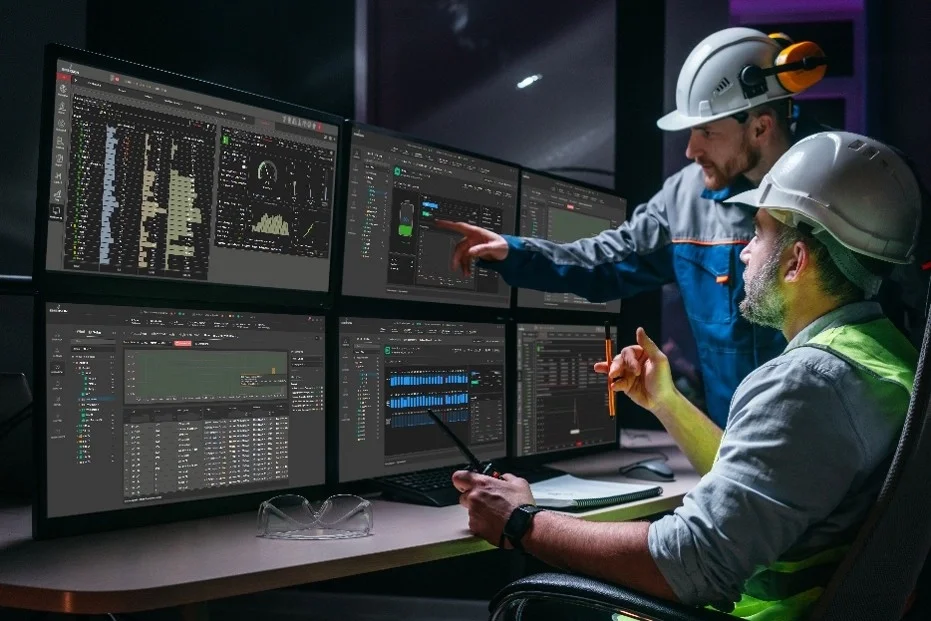
In addition, AI agents extend the capabilities of industrial AI by focusing on specific tasks. Operations agents can monitor processes and alarms; maintenance agents can track asset health and help forecast parts requirements; instrumentation and control agents can identify potential sensor drift; and management agents can consolidate information to support oversight and decision-making. Further capabilities can support training and simulation, while AI-driven anomaly detection and predictive maintenance can help identify developing equipment problems before they result in failures. Maintenance cost reductions of up to 30% and availability improvements of up to 20% can potentially be achieved, although actual results will depend on the application and operating conditions.
Accurate Measurement for More Effective Control
Accurate measurement is essential to effective power plant control. For ageing thermal plants, improving the quality and reliability of measurement can give operators a clearer view of plant conditions, helping them respond more effectively to changing operating demands.
Transient operation can expose weaknesses in conventional measurement technologies. This is particularly apparent in boiler drum level measurement, where pressure changes can cause level indications to become unstable or inaccurate. Such readings can prompt unnecessary operator intervention or, in some circumstances, contribute to plant trips.
Emerson’s Ovation Advanced Drum Level Control application uses a dynamic model of the drum system to predict how level will respond to changing energy and pressure conditions. This allows the control application to anticipate transient behaviour rather than simply reacting to measured level changes. Accurate measurement is equally important. Emerson’s guided wave radar Rosemount™ 5300 Level Transmitter, equipped with Dynamic Vapor Compensation (DVC), can provide more accurate drum level measurements during transient conditions. Unlike conventional differential pressure measurement arrangements that use wet legs, this approach can eliminate the associated wet leg freeze protection and heat-tracing requirements in applicable installations.
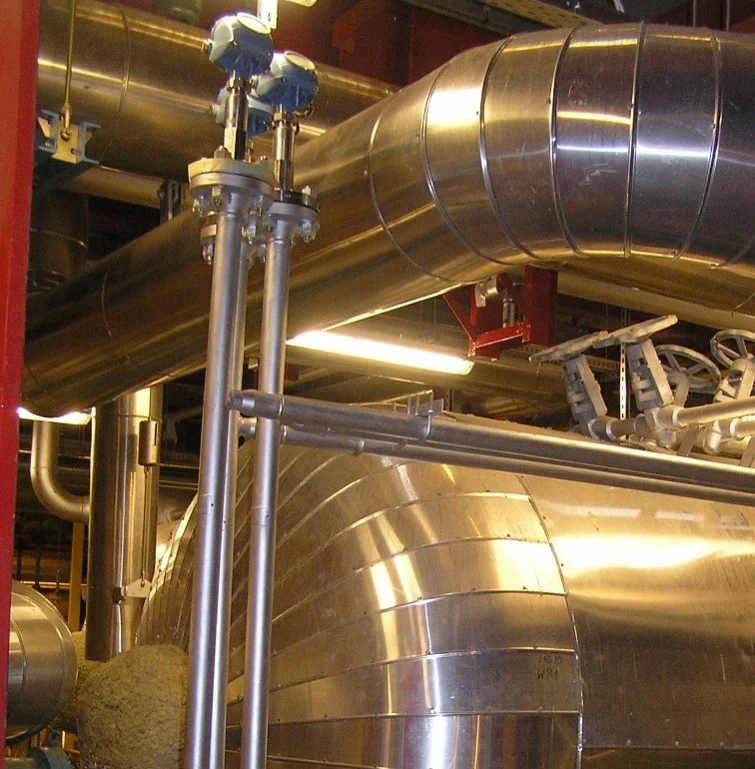
A US power generation company was experiencing unstable or incorrect drum level readings during transient conditions, contributing to unplanned shutdowns. Its existing differential pressure measurement technology also required wet leg freeze protection, adding maintenance requirements and creating another potential source of failure. Emerson implemented its Ovation Advanced Drum Level Control application alongside a Rosemount 5300 Level Transmitter with DVC. The control application uses a dynamic model to predict drum behaviour and compensate for transient effects, while the radar transmitter provides accurate level measurement as pressure conditions change.
Data indicates that density-based level measurement without compensation can produce errors of up to 30%, while guided wave radar without compensation can produce errors of up to 20%. With DVC, the Rosemount 5300 reduced measurement error to as little as 2%. The combined solution improved reliability by reducing false trips caused by level excursions during pressure transients. It also supported more aggressive load ramping without compromising drum integrity and reduced operator intervention by automatically compensating for complex dynamic interactions.
Targeted Applications for Greater Flexibility
Targeted modernisation applications can address particular operational problems and deliver measurable improvements in efficiency, flexibility and reliability. For example, Emerson’s Ovation Advanced Power Applications coupled with the intelligent devices and associated diagnostics address a range of operating challenges. Advanced bypass control manages bypass steam conditions during transient and load-rejection operation, while advanced inlet pressure control helps limit drum level instability during significant pressure transients. Advanced pump protection can improve response and reduce wear, and dynamic rotor stress management can help minimise turbine start-up times while respecting original equipment manufacturer stress limits.
Other applications focus on improving efficiency and emissions performance. Performance optimisation software can identify losses by comparing expected process and equipment performance against design, while selective catalytic reduction optimisation can improve ammonia reagent use while maintaining emissions compliance. Procedure integration helps reduce operator and process variability by promoting consistent execution of operating sequences.
Steam temperature optimisation is another important application. Maintaining appropriate steam temperatures can improve efficiency while protecting critical piping and other components from excessive thermal stress. Model predictive control can account for the long, nonlinear response of spray-water systems and optimise steam temperature during transient and cycling operation. In one example, a 22 Btu/kWh improvement from a baseline heat rate of 7,200 Btu/kWh represented an improvement of approximately 0.3%. At an assumed fuel cost of $2 per million Btu, this was estimated to be worth more than $228,000 annually. By improving steam temperature control and reducing unnecessary spray-water use, the application can also help limit wear on attemperators, valves and associated piping, potentially reducing maintenance requirements.
The impact of these applications can be magnified further when coupled with remote operations. Secure remote access can allow a smaller team to monitor and control geographically distributed generation assets from a central location, while local personnel remain available to deal with equipment problems and abnormal conditions. Centralised monitoring and control can improve fleet-wide visibility, while integrated analytics and cybersecurity capabilities support faster responses and help reduce operating costs. The following example illustrates how targeted automation upgrades can deliver measurable benefits while helping plants respond to increasingly flexible operating requirements.
Reducing Fuel Consumption
The potential of advanced automation to improve the efficiency of combined-cycle generation was demonstrated at a plant in the US. As the plant increased its cycling frequency, improving performance throughout the operating sequence, from start-up to shutdown, became increasingly important. Faster, more efficient starts could reduce fuel consumption and emissions while improving plant reliability.
Emerson implemented a combined-cycle optimisation strategy at a facility equipped with GE 7FA.04 gas turbines with advanced gas-path technology and a Westinghouse steam turbine generator. Two Ovation advanced applications were added to the existing automation platform, providing sequence automation and steam header blending. The results included a 67% reduction in average fuel use during 2×1 hot starts and a 31% reduction in average transition fuel use. The plant, which averaged approximately 50 hot starts and 300 hot transitions annually, also achieved faster start-ups and reduced emissions.
For European operators facing increasing demands for flexible generation, these results illustrate the potential value of targeted automation upgrades. Improving start-up sequences and managing transitions more effectively can help plants respond to changing electricity demand while reducing the fuel and emissions associated with cycling.
Extending the Value of Existing Assets
As Europe’s electricity system continues to evolve, the question for thermal power operators is not simply when an asset should retire, but how much more useful, flexible and reliable performance can be obtained from it. The right combination of control, measurement and digital technologies can help extend the life of ageing plants while improving the flexibility and resilience needed to support the transition to a lower-carbon electricity system. To learn more about Emerson’s solutions and expertise across the power value chain, visit www.Emerson.com/power.


