
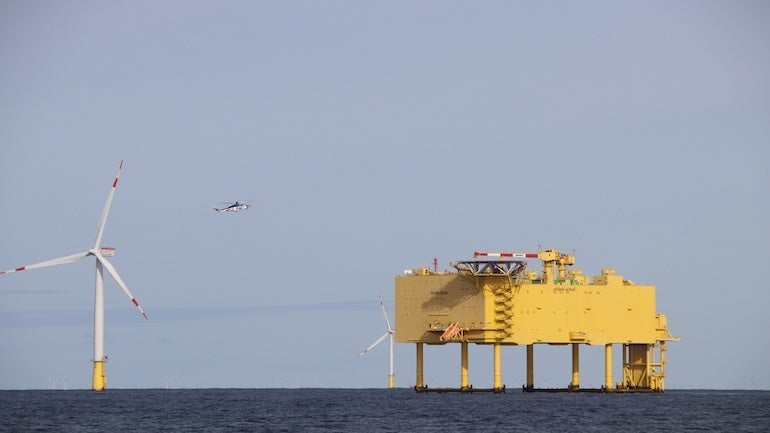
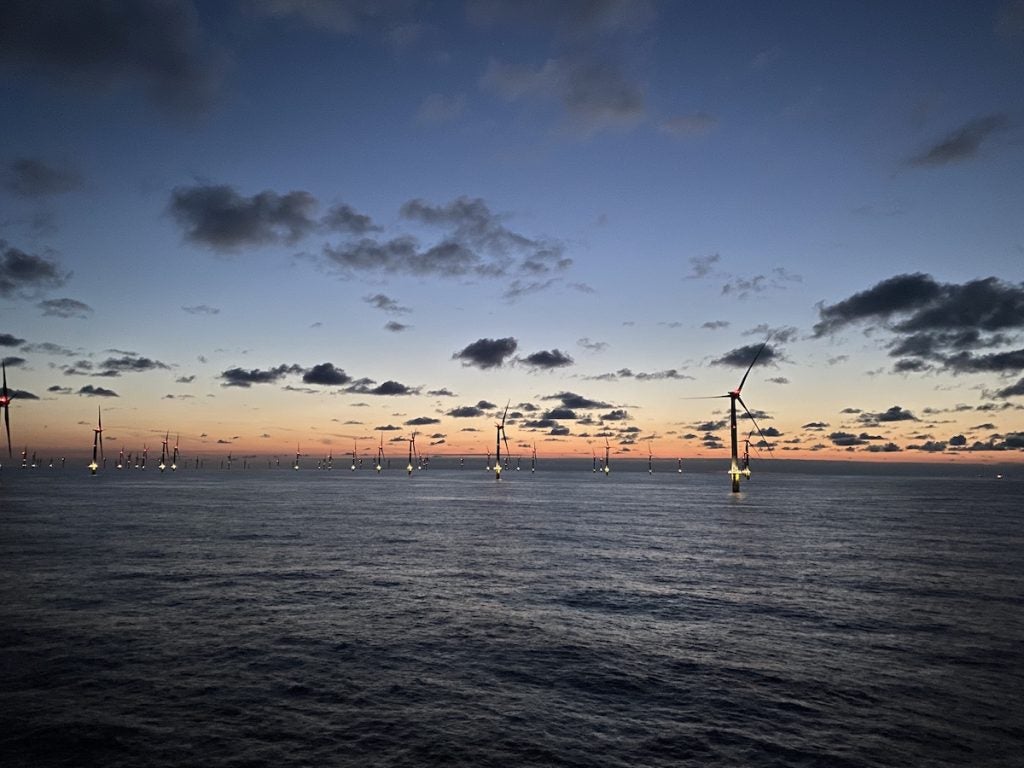
A vessel crew or flight deck often spots an offshore wind farm first as a pattern of flashing lights on the horizon. For operators, those lights are more than a marking requirement: they contribute significantly to critical infrastructure safety. As offshore capacity expands across the North and Baltic Seas, obstruction lighting has become a design, compliance and lifecycle issue.
Diverging requirements
Obstruction marking falls simultaneously under aviation and maritime safety law. In Germany, the Federal Waterways and Shipping Administration (WSV) governs marine marking, while the International Organization for Marine Aids to Navigation (IALA) shapes international Aids to Navigation (AtoN) guidance. Aviation authorities impose separate aircraft warning requirements. These can diverge in detail.
A marking concept approved for one site or jurisdiction may therefore need technical and documentary adaptation before it can be accepted elsewhere. Site-specific permitting conditions and local interpretations mean that developers and OEMs must treat obstruction lighting as an engineered solution. Compliance cannot rest on published product data for a given lighting component; authorities expect evidence that the full installation performs as designed under real operating conditions.
Photometric performance beyond brightness
Luminous intensity is not only the most cited parameter when assessing obstruction lighting in offshore wind turbines, it is also the most misleading in isolation. For this reason, marine marking requires 360° horizontal coverage and minimum intensities across relevant vertical planes, reflecting the different viewing geometries of both vessels and aircraft.
Colour performance, however, is just as important. Chromaticity, which defines colour by hue and saturation, gives the signal its navigational meaning. A light that falls outside the prescribed region of the CIE chromaticity diagram can be misread. Luminance of illuminated tower surfaces, distribution uniformity and glare control then determine whether the signal remains detectable in fog, rain or reduced visibility.
Synchronisation, durability and system integrity
An offshore wind farm creates a visual environment unlike that of a single obstruction. If dozens of identical lights flash out of time, the site can appear chaotic from a distance. This makes distance estimation harder and may obstruct the perception of individual turbines. Permitted timing deviations are therefore tight, in some cases below one tenth of a second. This hinges not only on the light fitting, but also on control logic, network performance and a stable time reference. A light that meets photometric requirements in isolation may still fail operationally if the farm-level control system cannot hold synchronisation under partial outage or maintenance conditions.
Offshore environments impose additional stressors that compound over the wind turbine generator (WTG) lifecycle. Salt spray, UV radiation, wind loading and continuous vibration can degrade optical components throughout the WTG lifecycle. UV exposure may cloud diffusers and reduce transmitted intensity. Seal failure can allow moisture ingress, while saline deposits on lenses can distort light distribution. Baseline photometric measurements under laboratory conditions establish a reference point. Later comparative measurements show how well the system adheres to said point, helping operators plan condition-based maintenance and keep non-compliances from going undetected.
Demand control, redundancy and cybersecurity
On many projects, demand-controlled night marking (DCNM) is no longer conceptual, but a regulatory expectation. The principle is simple: lights activate only when aircraft detection registers approaching traffic. The engineering challenge here lies in the dependencies this creates; sensors, control logic and fail-safe behaviour all need system-level verification. Availability is similarly important, as a failed unit can remain unreachable for days given the challenges of an offshore environment. Redundant component or circuit architectures can help preserve safety functions until repair is possible.
Where offshore wind infrastructure falls within critical infrastructure regulation, frameworks such as ISO/IEC 27001 apply. Obstruction lighting is increasingly integrated into IP-based supervisory architectures for remote diagnostics and synchronisation. This level of networked connectivity enlarges the attack surface. Disruption to communication, manipulation of flash timing or falsification of monitoring data can be extremely threatening to safety without showing any visible damage.
Making compliance auditable
Permitting authorities, lenders and insurers require traceable evidence. That translates into: photometric test reports covering intensity, distribution, chromaticity and uniformity; system descriptions addressing synchronisation logic and fail-safe states; maintenance concepts that account for the reality of offshore access, like limited weather windows or components ageing under salt or UV; and records supporting ongoing conformity audits. Independent third-party assessment strengthens this evidence base, particularly on cross-border projects or where long-term financing is involved.
TÜV SÜD provides continuity from early-stage qualification to periodic verification in operation. This ensures that the lights that protect aviation and shipping continue
to do so reliably for the full operational life of the installation.


