
The International Energy Agency has released the 2026 edition of its annual flagship report the World Energy Outlook (WEO). It draws on the latest energy data across all fuels and technologies, together with detailed modelling and analysis, to provide insights into potential pathways for the energy sector.
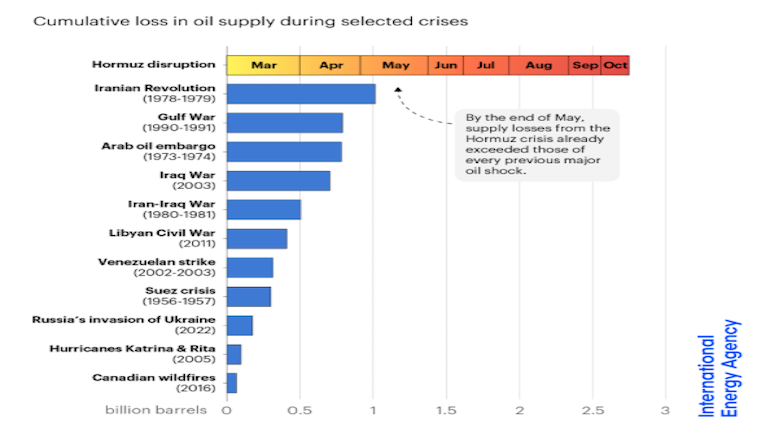
This year’s edition arrives at a moment of extraordinary uncertainty, says the IEA. It comes as the energy market impacts of the Middle East conflict and disruptions to shipping through the Strait of Hormuz have reached to all corners of the world. And this is taking place in a broader context of geopolitical strains, trade tensions, rising climate risks, cyberattacks and more. The unprecedented supply shock resulting from the ongoing conflict in the Middle East dwarfs past disruptions and is set to reshape the energy world for years to come. Through its extensive analysis, says the IEA, this year’s WEO explores possible futures, mapping the energy futures that could emerge from today’s upheaval.
Key findings of the WEO
As countries around the world confront the largest energy supply shock in history alongside an array of other risks, the range of possible energy futures is widening. Whatever path the world takes, rising incomes and population growth are set to boost demand for the services that energy provides, including mobility, heating, cooling and computing power.
• Rising global temperatures are adding to these pressures. In a striking milestone, the report finds that for the first time energy needs to keep buildings cool are now overtaking energy needs for heating them.
• The Hormuz crisis has led many countries to revise their energy strategies as they seek to reduce vulnerabilities and improve affordability. Although national responses to the crisis vary, WEO-2026 sees some common directions emerging: greater diversification of energy supplies, trade routes, fuel mixes and technology supply chains; a stronger preference for domestically available energy resources; and a push for faster progress on electrification.
• Should significant risks to shipping through the Strait of Hormuz persist, investment in new bypass pipelines, alternative sources of supply and measures by importers to displace demand could dramatically reduce the need for oil flows through the Strait by 2035. But even in this extreme case, the Middle East would remain the world’s largest exporter of oil to international markets.
• The biggest beneficiaries from a pivot towards domestic energy resources are set to be renewables – led by solar PV – and nuclear power, all of which see strong growth across the report’s scenarios. Energy efficiency and biofuels could also gain ground, alongside domestic fossil fuels in some countries.
• Since 2019, global demand for electricity has grown at a faster rate than the world economy and twice as fast as overall energy demand. Growth is set to accelerate even further in the next decade, with electricity’s share of final energy consumption closing in on 30% globally in all our exploratory scenarios – and potentially reaching 35% if countries adopt additional measures to support faster electrification.
• Access to electricity and clean cooking accelerated in 2025, but higher fuel prices and supply shortages in 2026 risk slowing further gains, particularly in emerging and developing economies.
• While the crisis is likely to accelerate the uptake of low-emissions technologies globally, there is still a large gap between trajectories based on current or stated policies – whose temperature outcomes range from 2.5 °C to 2.9 °C of warming – and a 1.5 °C-aligned pathway.
For more information and analysis of these findings, read the IEA’s full report.


