
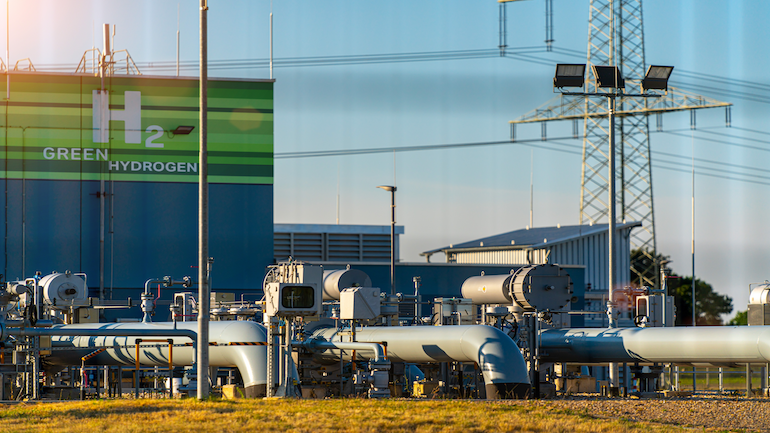
Committed investment in clean hydrogen projects has exceeded $130 billion worldwide, with more than 570 projects representing 6.9 Mtpa of committed production capacity, according to the Hydrogen Council’s Global Hydrogen Compass 2026.
The report, produced with McKinsey & Company and drawing on input from around 70 global CEOs, says 90% of committed capacity is already operational or under construction. Global operational capacity has nearly doubled over the past year and is expected to double again during the next year as projects currently being built enter service.
China remains the largest market, accounting for more than half of committed renewable hydrogen capacity and around 90% of new operational capacity added globally since 2025. Europe is the second-largest market by project numbers and has recorded a 35% increase in investment since last year.
The US remains the leading market for low-carbon hydrogen deployment, accounting for approximately 75% of committed low-carbon hydrogen and ammonia capacity, according to the report.
The report also highlights a significant gap between potential hydrogen demand and projects supported by firm policy measures. Existing policies could unlock around 11 Mtpa of clean hydrogen demand by 2030, but only about 6 Mtpa is currently supported by policies that have been enacted and implemented.
Closing the remaining gap will require governments to strengthen incentives and mandates and establish carbon-pricing mechanisms capable of creating demand signals, the Hydrogen Council said. Industry, meanwhile, needs to reduce production costs and develop supporting infrastructure.
The report argues that hydrogen’s role is increasingly being considered alongside electrification and renewable generation as governments address energy security, industrial competitiveness and decarbonisation.
Hydrogen Council Co-Chair Jaehoon Chang said the focus had shifted from whether hydrogen could deliver to “how fast countries choose to build”.
The findings point to an industry moving from project development towards deployment, but with progress increasingly dependent on policy certainty, infrastructure availability and the ability of projects to secure viable demand.


