
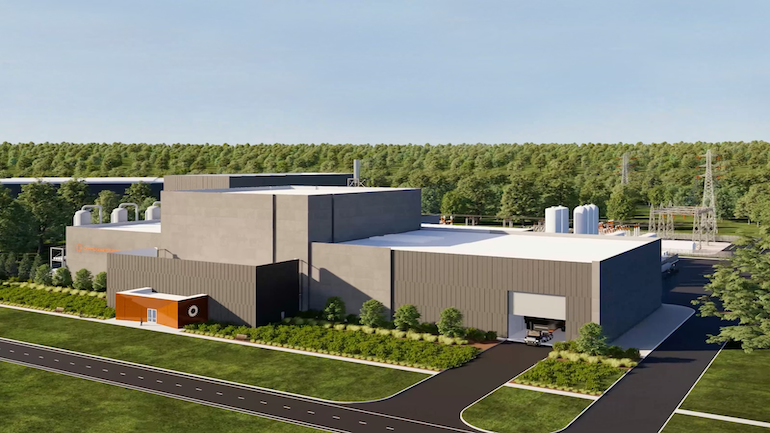
Commonwealth Fusion Systems has become the first fusion power developer to apply to PJM Interconnection, the largest US wholesale electricity market, or indeed to any major grid operator. Through this submission, CFS is demonstrating the ability to connect a fusion power plant to a system that serves about 182 000 MW of capacity to more than 65 million customers across 13 states.
Submitting this interconnection request helps to derisk delivering power from the ARC plant since it is one of the long-lead actions necessary to connect a grid-scale power plant in the early 2030s. The ARC (Advanced Research Centre) power plant is a commercial tokamak fusion project developed by CFS. As part of the submission procedure, CFS will work through PJM’s stress-test process to demonstrate that it can reliably help to meet the region’s surging energy demands.
The power plant is to be located in central Virginia, the region with the highest forecast load growth in the USA. Entering PJM’s queue now is to ensure that CFS will be able to connect to the grid upon completion of the power plant’s construction. Dominion Energy has advised CFS on best practices for navigating PJM’s interconnection process as part of its Joint Development Agreement with CFS.
An interconnection application is the formal process of requesting to ‘plug in’ a new power plant to a Regional Transmission Organisation. it kicks off a series of engineering studies to ensure the grid can safely and reliably handle the influx of the new generating capacity and energy being provided and assess whether any network upgrades are required.
The application keeps CFS on track to connect its first power plant to the grid and deliver electricity in the early 2030s. CFS has announced that the site in Chesterfield County, Virginia, on which its first 400 MW ARC plant will be built, has been named the Fall Line Fusion Power Station. The name references the geological boundary where Virginia’s elevated Piedmont region drops down to the Tidewater coastal plain, creating the rapids on the James River, historically a source of hydropower.


