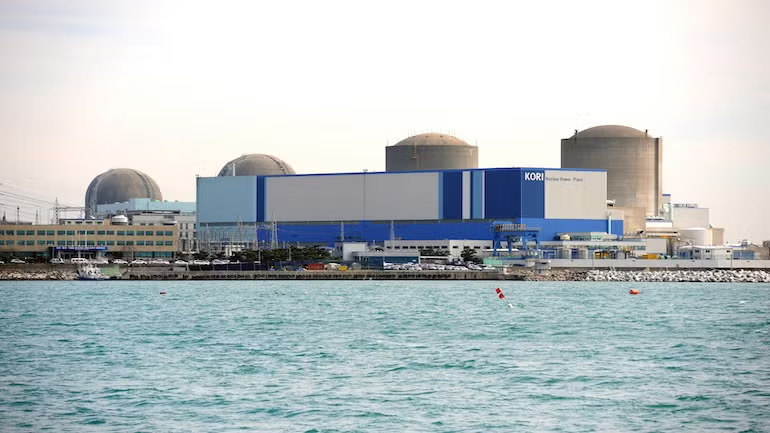
Unit 2 of South Korea’s Kori NPP in Gijang-gun, Busan, which was approved for continued operation last November, is restarting its reactor for the first time in three years after receiving permission from the Nuclear Safety & Security Commission. The Commission permitted Kori 2 to reach criticality after confirming the safety of its follow-up measures and overall facilities in line with the licence for continued operation. After startup, the plant will begin full-scale power generation once subsequent inspections are completed.
Kori 2, a 685 MWe pressurised water reactor that began operating in 1983, was shut down in April 2023 with the expiry of its 40-year operating licence. South Korean NPPs can continue to operate beyond their original design life after a detailed safety assessment, with licences issued every 10 years. Kori 2 is the first NPP to do so, after fully implementing the requirements of the ‘Severe Accident Management Plan,’ which codifies the response system for severe accidents.
NSSC confirmed improvements including design changes to accident management facilities such as an external injection path for reactor coolant, and the installation of new equipment to supply power to essential accident response systems. After such a long-term shutdown, it was necessary to conduct intensive inspections on safety-related pumps and valves.
It was confirmed that 10 safety measures required for completion before the restart and the replacement of cables to secure safety margins had been properly implemented in accordance with technical standards. NSSC has completed 94 of the 102 periodic inspection items required before criticality and will finally confirm the plant’s safety through eight subsequent tests, including power ascension tests.
Korea Hydro & Nuclear Power (KHNP) is currently submitting safety assessment reports to NSSC for the continued operation of nine other units whose operating licences expire before 2030 (Kori 3&4, Hanbit 1&2, Hanul 1&2, and Wolsong 2-4). Kori 3 was suspended in September 2024 and Kori 4 in August 2025 at the end of their 40-year design lives. Kori 1 was permanently shut down in June 2017 after 40 years of operation and is undergoing decommissioning.


