
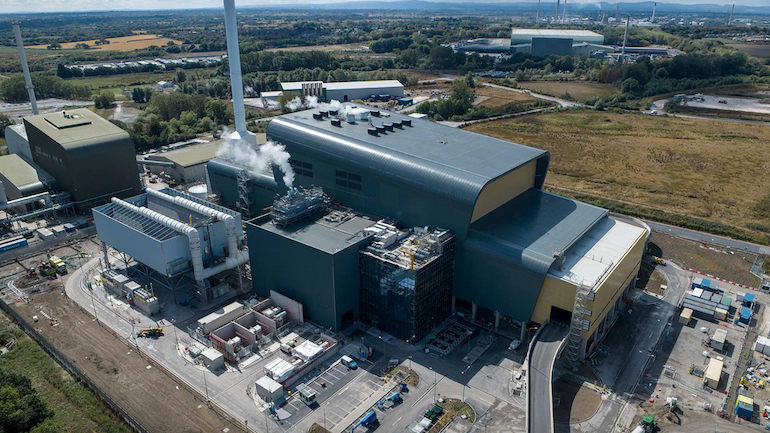
A waste-to-energy plant under construction at the Protos site in Cheshire, UK, has entered the final stages of commissioning after its first successful firing of residual waste.
The milestone was reached with global energy company Metlen, which specialises in the development, construction and operation of thermal power plants, conducting the first fire at the facility it is delivering for Encyclis. The milestone marks the transition to hot commissioning, ahead of the plant’s planned entry into commercial operation.
The Protos Energy Recovery Facility is designed to process 500,000 tonnes of non-recyclable waste a year and generate up to 49.9 MW of baseload electricity.
Unlike conventional recycling, the facility is intended to deal with waste remaining after recyclable materials have been removed. Energy will be recovered through combustion, while the resulting bottom ash will be processed into secondary construction aggregates and metals will be recovered for reuse.
Metlen is acting as strategic turnkey contractor, responsible for the design and execution of the project in partnership with Standardkessel Baumgarte. It is the company’s first waste-to-energy project.
The development has faced what Metlen described as a challenging delivery environment, including material inflation and supply chain disruption. The company has previously acknowledged time and cost pressures during construction.
The first-fire milestone nevertheless represents an important step towards proving the plant’s complete thermal and power-generation systems under operating conditions.
Metlen said the project also demonstrates the capabilities of its M RESET platform, following the integration of its former M Renewables and M Power Projects activities.
The company has operated in the UK energy market for more than a decade and says it has completed or is working on more than 90 projects spanning solar, battery storage, grid infrastructure and thermal generation.
The Protos facility adds another technology to that portfolio at a time when the UK’s waste sector faces the dual challenge of reducing landfill while finding uses for residual waste that cannot be economically recycled.


