TerraPower has signed two agreements in South Korea aimed at accelerating commercial deployment of its Natrium advanced nuclear technology in the US, Korea and selected international markets.
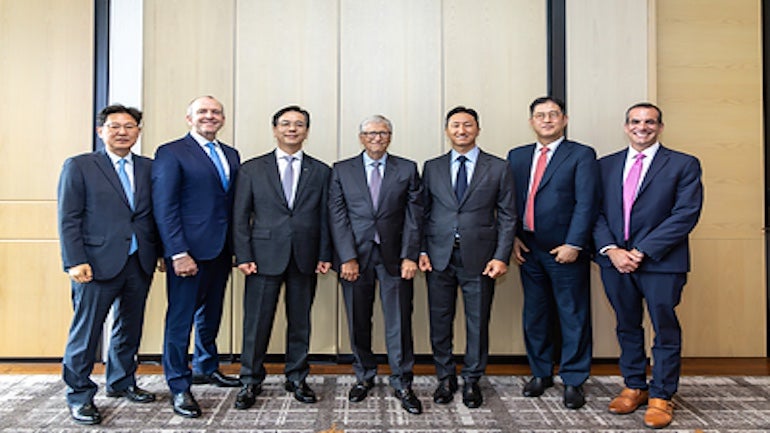
The agreements were announced during a visit to Seoul by TerraPower founder Bill Gates and CEO Chris Levesque. The company is targeting completion of its first Natrium plant in the US in 2030.
Hyundai Engineering & Construction (HDEC) has been selected as TerraPower’s engineering, procurement and construction contractor for up to eight future Natrium reactors. Separately, TerraPower and SK Innovation have agreed to explore development of Korea’s first commercial Natrium plant.
TerraPower is seeking to turn its reactor design into a repeatable commercial product, with Korean engineering and construction expertise expected to help reduce costs, improve delivery and establish supply chains for a potential fleet.
Under the framework agreement, HDEC will work with TerraPower on up to eight reactors with completion, price and performance guarantees. The company says the approach is intended to make conventional commercial financing easier to secure while reducing the cost and schedule uncertainty associated with first-of-a-kind nuclear projects.
The separate agreement with SK Innovation will examine the development of a Korean Natrium plant and potential international projects. The companies also plan to investigate engineering and digital technologies, including digital twins and artificial intelligence for plant operation and maintenance.
“Combining TerraPower’s innovative advanced nuclear technology with Korea’s nuclear construction and operational expertise will strengthen our global cooperation,” said Chris Levesque, TerraPower’s president and CEO.
The Natrium design combines a 345 MW sodium-cooled fast reactor with a molten-salt energy storage system. TerraPower says the storage system can increase output to 500 MW when required, allowing the reactor to maintain steady generation while providing additional power during periods of high demand.
That flexibility is a central feature of TerraPower’s proposition as electricity demand grows from data centres, industrial electrification and other large loads. Rather than relying on the reactor alone to follow short-term demand, stored energy provides a way of increasing output without changing the reactor’s baseline operation.
The first Natrium plant is being developed in Wyoming through the US Department of Energy’s Advanced Reactor Demonstration Program and is expected to be completed in 2030.
TerraPower is also pursuing commercial deployment with Meta, which has agreed to explore up to eight Natrium plants by 2035.
The agreements with HDEC and SK Innovation represent a significant shift from demonstrating the technology towards building a standardised supply and construction model for multiple reactors. The challenge now is converting those plans into licensed, financed projects that can be delivered at the promised cost and schedule.


