
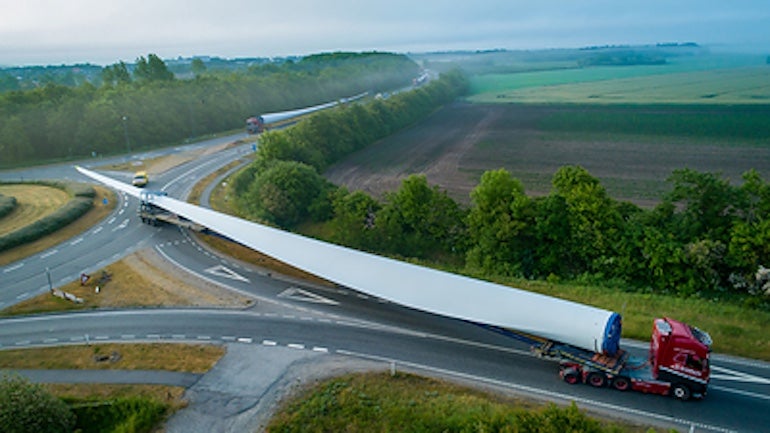
Vestas has secured contracts to supply 16 V163-4 MW wind turbines for two wind farms in central Vietnam, with deliveries scheduled to begin in 2027.
The projects, being developed in partnership with a Vietnamese renewable energy developer, are included in Vietnam’s Power Development Plan 8 (PDP8). They are among the early wind projects under the plan to obtain investment licences and move towards construction.
The combined 64 MW capacity will use Vestas’ V163 turbine, with a 163-metre rotor and site-specific tower configurations providing a hub height of 155 metres. According to Vestas, the rotor will be the largest from its turbine portfolio deployed in Vietnam to date.
The turbines are based on the company’s 4 MW platform, which Vestas says has more than 88 GW of installed capacity globally, including 1.6 GW in Vietnam. The company said the larger rotor and increased hub height have been selected to suit the wind conditions at the two sites.
The contracts also include 20-year Active Output Management 5000 service agreements covering operation and maintenance.
“We are honoured by our customer’s confidence and proud to be supporting some of the first wind projects moving forward under PDP8,” said Antoine Croize, country manager for Vestas Vietnam. “These projects demonstrate that the next generation of wind development in Vietnam can be enabled through innovative, proven technology and tailor-made solutions.”
The projects will be located near existing Vestas installations, and the company said the development is expected to extend local employment associated with long-term turbine servicing.
Vietnam has identified increased renewable generation as part of its longer-term power sector development, with PDP8 setting out plans for substantial expansion of wind and other low-carbon generation. The two projects are among those now progressing from planning towards implementation.
Vestas has installed 1.6 GW of wind capacity in Vietnam to date. Components for the new projects are expected to begin arriving in the country in 2027, followed by turbine commissioning.


