
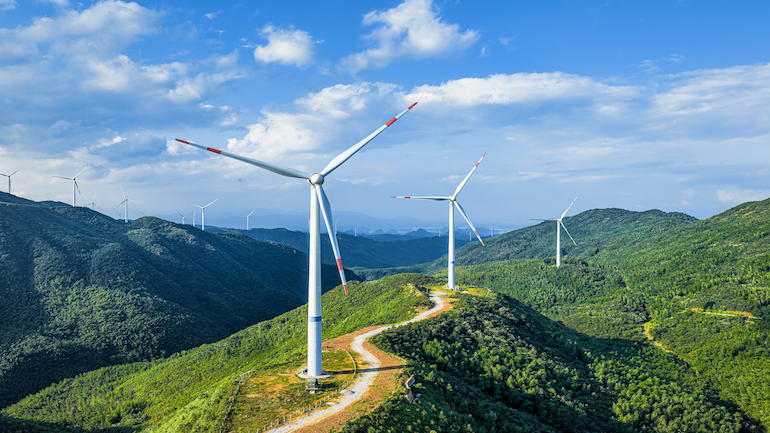
Wind power has cemented its role as a core pillar of the modern electricity system, with 165 GW of new capacity installed in 2025, up around 40% on the previous record year, according to the latest Global Wind Report released on 20 April by the Global Wind Energy Council. Global wind capacity now stands at 1,299 GW, spread across 138 countries, as governments increasingly lean on homegrown wind to strengthen energy security and industrial competitiveness.
The 2025 build‑out saw China, the United States and India dominate additions, mainly driven by strong onshore demand. Turbine‑level data show that 28,395 new wind turbines were commissioned across 57 countries, from large‑scale wind farm deployments to tailored onshore projects serving growing industrial and digital loads. The report underscores that wind is no longer a niche renewable: it is now the only clean energy source with proven scale, reliability and geographic reach capable of anchoring grids while the global energy system contends with sustained fossil‑fuel price volatility and geopolitical shocks.
Against a backdrop of supply chain pressures, rising commodity costs and surging power demand from data centres and advanced manufacturing, wind’s growth reflects both policy ambition and commercial maturation. The report highlights that conditions for maintaining momentum include long‑term, stable policy frameworks, improved grid integration planning and faster permitting, while the “Markets to Watch” section spotlights jurisdictions where deployment is finally catching up with stated climate and industrial targets.
For system planners and project developers, the 2025 figures signal that wind power has moved beyond discrete pilot zones into a mainstream, system‑wide asset class, delivering firm, low‑cost capacity and resilience across both mature and emerging markets.


