
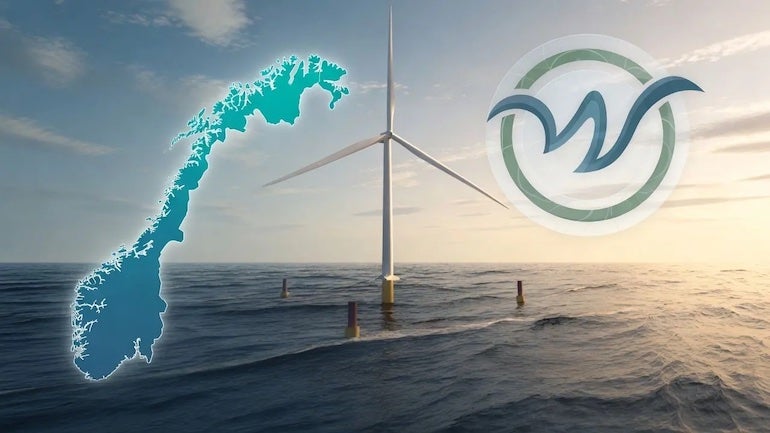
Norway’s energy transition agency Enova has awarded funding to Windeed AS for a feasibility study aimed at taking its floating offshore wind foundation technology towards a full-scale demonstration project.
The award marks the next stage in Windeed’s development programme, following an independent assessment by BVG Associates that found the technology could achieve a lower levelised cost of energy than conventional floating wind systems.
Windeed will carry out the study with Norwegian engineering group Aibel and construction company AF Gruppen, alongside other industrial and research partners. The work will examine how the technology could be manufactured, transported, installed and operated using Norwegian supply chains.
Floating wind has demonstrated that large turbines can operate offshore on floating foundations. The bigger challenge is reducing the cost enough for the technology to compete at scale without prolonged dependence on government support.
Windeed’s foundation concept is intended to address some of the expensive elements of floating wind projects by reducing material use and simplifying fabrication and installation. The company also aims to reduce reliance on specialist ports and offshore construction vessels.
Oskar Gärdeman, Head of Offshore Wind at Enova, said: “Floating offshore wind is a crucial technology to meet the future demands on fossil free energy.”
He added that the sector needs technologies capable of disrupting established approaches and delivering significant cost reductions, describing Windeed’s technology as “especially promising”.
The feasibility study will assess the entire project chain, rather than treating the floating foundation as an isolated component. Engineering, fabrication, assembly, logistics, installation, operations, lifecycle performance and risk will all be examined.
Windeed CEO Bertil Moritz said: “Floating wind must become commercially competitive if it is to play a significant role in Europe’s future energy system.”
The study is intended to establish whether the claimed cost advantages can be translated into an industrial project and identify the role Norwegian companies could play in delivering it.
For Norway, the programme also has an industrial dimension. The country has extensive offshore engineering and maritime expertise but is seeking new export opportunities as the energy system shifts away from fossil fuels.
Moritz said Norway had “a unique opportunity to take a leading position in floating offshore wind”, adding that the project would explore how innovative design and industrial partnerships could make the technology more competitive and scalable.
If the feasibility work supports the technology’s commercial case, it could provide a pathway towards a full-scale demonstration in Norwegian waters and, ultimately, larger floating wind projects.


