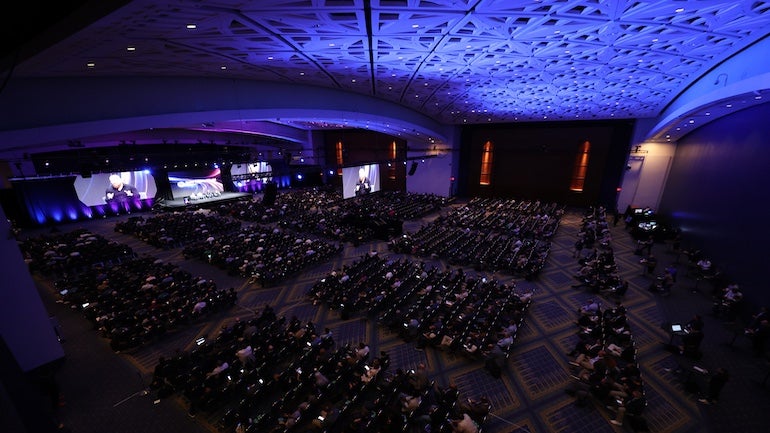
The Data Center World conference in Washington, DC earlier in 2026 was all about AI. But if the vision of an AI future is ever to be realised, vast amounts of new power generation are needed fast. Every projection concerning the power needs of AI is turning out to be an underestimation due to technology innovation.
“Last year, some thought we had over-predicted AI and datacentre build out, yet this year we have had to revise our projection upwards once again,” said Alan Howard, an analyst with IT research firm Omdia. “There is an unprecedented volume of datacentres currently under construction or planned and they are highly focused on time to market.”
A datacentre developer and operator known as Aligned Data Centers, for example, has more than 80 facilities under construction. All of their space and equipment has already been leased to customers. But the big constraint for these emerging “AI factories” is power. No sooner has an AI datacentre design been finalised and approved than new requirements emerge – especially as regards to the amount of power that needs to be fed into the datacentre.
“Partway through one ongoing datacentre construction project, the customer decided they needed 50% more power due to the pace of AI innovation,” said Phill Lawson-Shanks, CEO of Aligned Data Centers. “We needed to restructure everything to be able to introduce enough power from the grid.”
Onsite or grid?
Most hyperscalers and datacentre developers would prefer to receive power directly from the grid. After all, they are not in the business of power generation. But grid interconnection requests from AI datacentres have broken the traditional power provision model. Instead of requesting 20 MW in five years time, the latest generation of datacentres demand 1 GW, 5 GW, or even 10 GW within a year or two. In most areas, it simply isn’t available. Hence, they are being forced into the onsite power business. Many see this as a temporary arrangement. They can help get the needed facilities built but many will eventually hand them back to utilities to run.
Like Aligned Data Centers, CyrusOne, has entered the datacentre construction business – reluctantly. Where it can, it prefers grid power. For example, it is partnering with Calpine, a business unit of Constellation, to get power for a new datacentre that will be built beside the 1 GW Freestone Energy Center near Dallas, Texas. CyrusOne gains access to power, grid connectivity, and site infrastructure. Calpine is adding another 380 MW to the site.
“Operating power plants is a completely different business and is one hyperscalers and developers have no experience in,” says Gene Alessandrini, Senior Vice President of Energy and Location Strategy at data center operator CyrusOne.
AI’s insatiable power demands
Omdia predicts that by 2030, AI will drive more than 50% of installed MW of power generation capacity and AI usage will increase by up to 100 times current levels. Despite so many datacentres coming online each year, available datacentre space for leasing is at an all-time low.
“The pace of datacentre investment is accelerating and we expect that to continue for some time to come,” said Howard. “Datacentre developers can’t get enough power as there is so much demand. The amount of compute power being consumed by AI data centres and applications has increased by two orders of magnitude in the last six months.”
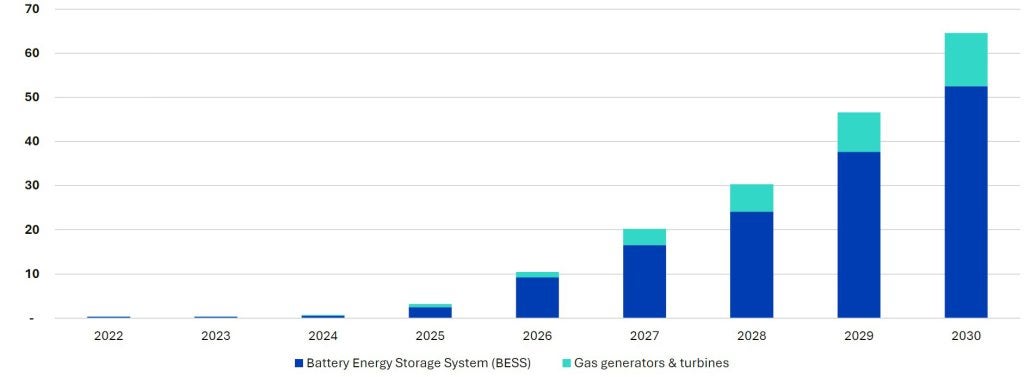
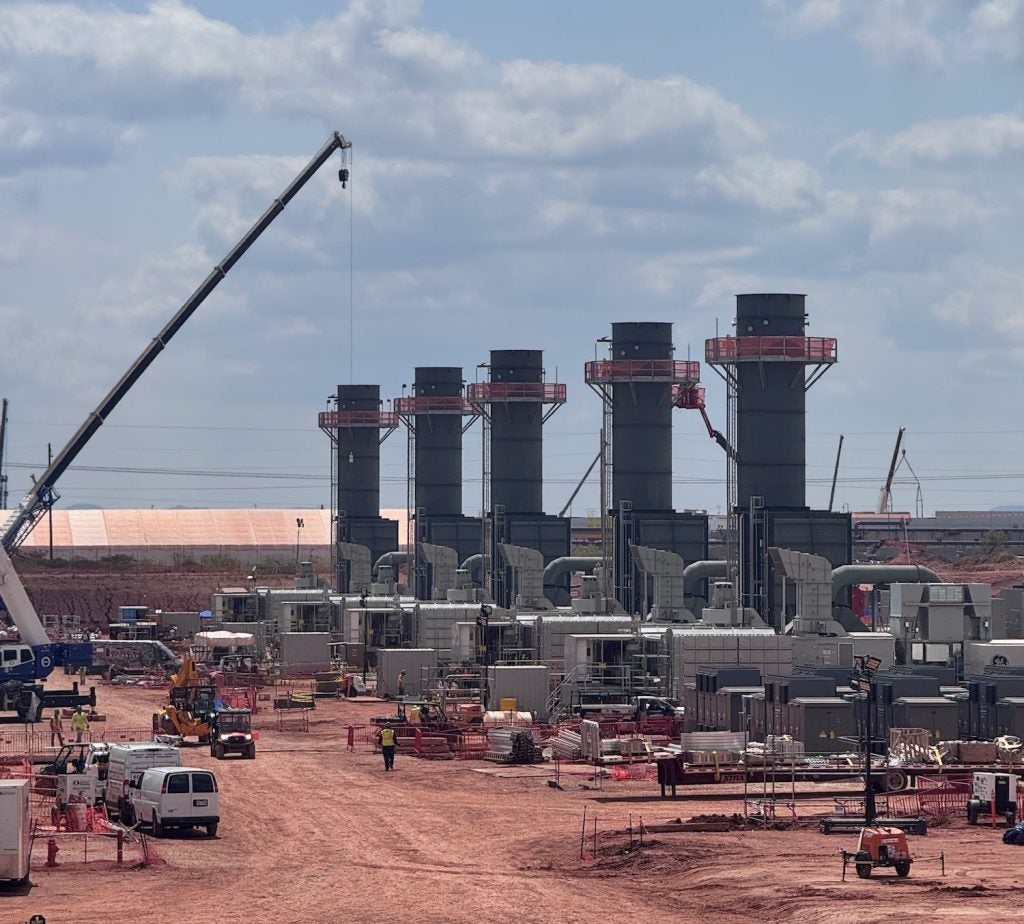
By 2030, hundreds of datacentres will be operating that require 1 GW or more of generating capacity. Hyperscalers such as Google, Microsoft, Oracle, Meta, and Amazon, along with chipmaker Nvidia, are driving the AI datacentre investment boom. Oracle, for example, is scrambling to get power from anywhere it can. It is a senior partner in the vast Stargate datacentre complex that is being built in Abilene, Texas using a potpourri of power assets including GE Vernova LM2500XPRESS gas turbines, Solar Turbines Titan 350 units, Dynamis DT35 turbines, and fuel cells from Bloom Energy. It will eventually take up eight buildings across 4 million square feet, requiring 1.2 GW. And that’s just the start. Oracle is adding another 60 or more facilities to the 147 it currently operates.
In addition, Oracle is adding a lot of battery energy storage systems (BESS). Storage is becoming an increasingly vital part of datacentre projects as one element of a sophisticated array of power electronics being added to cope with the volatility of AI computing workloads, which can swing from 300 MW to 1 GW within a few milliseconds.
“Gas turbines can’t cope with massive power swings produced from AI datacentres that can happen several times a second,” said Ram Nagappan, Vice President of AI Infrastructure at Oracle Cloud Infrastructure. “BESS can act as a buffer to dampen these power swings, which is beginning to emerge as a new requirement for AI datacentres.”
Better grid citizens
Such arrangements are increasingly being mandated by regulators and utilities as part of datacentre permitting processes. Storing energy in battery energy storage systems is only one part of it. Other facets include consenting to load shedding and demand response agreements during peak periods or outages. Voltage ride through capabilities, having enough onsite backup generators and batteries to operate for extended periods during a grid emergency, and willingness to ramp down AI processing when the grid needs support are becoming common features in new designs. Google is even designing systems that can switch traffic from a datacentre in one utility zone to a different region during grid events.
“Datacentres are going to have to provide AI smoothing, more flexibility, and adhere to new grid requirements such as low voltage right through,” said Sean James, a datacentre designer and engineer at Nvidia.
Another design change is the introduction of 800 V DC power. Grids have traditionally operated on AC power and then a complicated AC to DC to AC switching goes on once that power is delivered to the datacentre. As well as higher efficiency, and being able to bring in a lot more power to the datacentre, 800 V DC significantly reduces the amount of cabling needed to support AI – hence more space is made available for computing. Google is one of those in the forefront of introducing 800 V DC into the datacentre.
Dealing with local opposition
There is no doubt that some of the planned AI facilities won’t see the light of day. Some projects are being cancelled, some scaled back, and local opposition groups sometimes stall projects that have already been approved. Nevertheless, the volume of construction, groundbreakings, announcements, and investment continues to rise.
“The pace of AI construction and investment has accelerated in the past year,” said Howard. “The volume of datacentre activity planned is unprecedented.”


