
For decades, conventional power plants such as coal and nuclear units provided more than electricity. Their heavy rotating generators stabilised grid frequency at 50 or 60 Hz, acting as shock absorbers during sudden changes in demand or supply. As these plants are phased out in favour of inverter-based renewables such as wind and solar, that natural inertia disappears, making frequency control harder and grid stability more fragile.
Electrolysers add another dimension to this challenge. They are central to the energy transition, converting electricity and water into green hydrogen for sectors where direct electrification is not feasible. In the EU alone, 40 GW of electrolyser capacity are planned, meaning not only more plants, but much larger ones. And they are not alone – other emerging large-scale consumers such as data centres and grid-scale battery storage will also need to be integrated into a system already stressed by the rise of variable renewables and the decline of conventional, controllable plants with their stabilising functions.
A single industrial-scale electrolysis unit can draw hundreds of megawatts, comparable to the electricity demand of a city with 350 000 residents. Unlike a city, which has thousands of connection points, an electrolyser connects to the grid at a single node. If something goes wrong at that point, both grid stability and stable plant operation are at risk.
Integrating these large consumers with their electrochemical processes into the grid requires careful planning. Operators, manufacturers, and plant owners must work together to ensure that electrolysers do not destabilise the system and that they can withstand sudden voltage or frequency changes without damage.
Grid operator requirements: from passive load to active support
Europe’s grid is under increasing stress as conventional plants with stabilising inertia disappear and renewables dominate. In this environment, connecting multi-megawatt electrolysers adds significant complexity. To maintain stability, grid operators rely on fast-reacting systems and strict technical rules that define how connected equipment must perform to keep the grid safe and reliable, so-called grid codes. The expectation is clear: electrolysers must move beyond passive consumption to active support of the grid.
European regulations, driven by the revision of the Demand Connection Code, are tightening. Some requirements, such as voltage and frequency bands, harmonic limits, and baseline reactive power control are already established. Others, like advanced dynamic functions, will become mandatory in the coming years. In addition to EU-wide regulations, many countries are developing their own, usually stricter, requirements for electrolyser grid connection, adding further complexity to project planning. Developers must design for compliance today and anticipate stricter rules for the projects of tomorrow.
Key functions include: fault ride through (FRT), which keeps plants connected during short voltage spikes and dips and restores power quickly; limited frequency sensitive mode (LFSM), where consumption adjusts with frequency deviations; and, possibly in the future, power oscillation damping, adding fast modulation to prevent instability. These active power responses directly affect hydrogen output and cannot be treated as secondary.
Reactive power obligations are equally demanding. Plants must stabilise voltage through fixed power factors or dynamic Q(U) curves and inject reactive current during faults – often within milliseconds – to prevent cascading failures. Meeting these requirements calls for plant-wide design, precise control systems, and validated models that balance grid support with safe, efficient hydrogen production.
The manufacturer’s perspective: technology that responds fast
Electrolyser technology is evolving to meet these demands. Modern systems, especially proton exchange membrane (PEM) electrolysers, can adjust power intake within seconds, making them suitable for frequency control. This dynamic behaviour allows them to deliver: frequency containment reserve (FCR), which reacts within seconds to stop frequency deviations; automatic frequency restoration reserve (aFRR), which restores balance within minutes using automated signals; and manual frequency restoration reserve (mFRR), which provides backup through manual activation over a longer timeframe, turning a large consumer into a flexible grid resource.
New grid code requirements demand even faster reaction times. This has an impact on the whole electrolyser plant. Manufacturers must design entire plants, including electrical systems, automation, and control software, to respond quickly and safely especially to grid events. For example, active power adjustments directly affect hydrogen production and depend on how the DC current is managed. Reactive power support, such as voltage control, adds another layer of complexity.
Safety limits also matter. Large-scale electrolysers operate under strict constraints to prevent dangerous gas mixing, such as hydrogen crossing into the oxygen side. These limits define the lowest operating range and influence how far the plant can ramp down during grid disturbances. Balancing flexibility with safety is a key design challenge for manufacturers.
Those grid facing functions are not satisfied by the converter alone. They shape the entire plant architecture. On the electrical side, rectifier choice matters. Current-source thyristor systems are proven and robust but limited in controllability, while voltage-source insulated gate bipolar transistors (IGBT converters) offer fully controllable fast dynamics at higher cost and complexity. On the process side, rapid ramps in DC current cause mechanical and gas handling transients, differential pressures across membranes, inrush currents, and short term pressure spikes or dips in separators and headers, to name a few. Safety boundaries linked to foreign gas concentrations such as hydrogen cross over to the oxygen side define a lower safe operating point and can limit the ramp-up response of an electrolysis system. Above the upper operating limits, frequency driven overconsumption cannot simply be increased indefinitely. Ageing shifts absolute capabilities: beginning of life and end of life stacks demand different power for the same hydrogen output and respond differently to fast events. Downstream equipment – compression, purification, buffer tanks, and auxiliary systems including low voltage supply and UPS – must sustain the same disturbances without triggering a second level trip that turns a grid event into a plant outage, or prevents the core electrolysis process from stopping and thus violating grid code requirements.
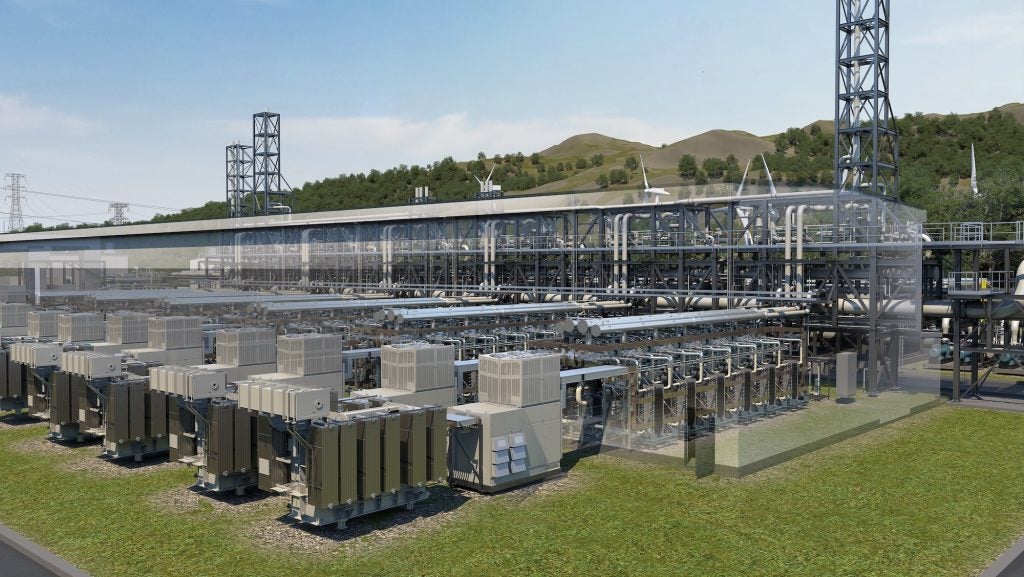
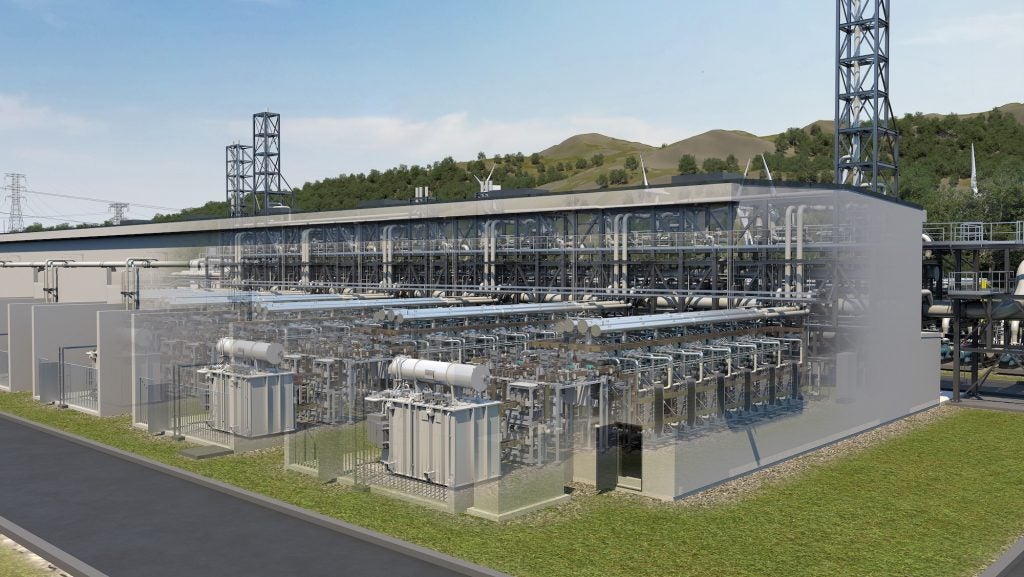
PEM technology brings intrinsic advantages for dynamic operation. It copes well with rapid load changes and therefore lends itself to functions like FRT recovery ramps and active damping. Alkaline systems can meet many requirements but typically exhibit slower ramp rates. Where regulations require power level adjustments at tens of percent per second, alkaline plants may need configuration changes or additional equipment to avoid tripping and to restore production within mandated windows. None of this argues against alkaline electrolysis; it makes explicit that grid code compliance must be engineered for the chosen technology, not assumed from converter capabilities alone.
The plant operator’s perspective: managing risk and reliability
Project developers should treat grid support functions as primary design criteria at the grid access point, not as late stage additions. Early engagement with TSOs to understand the requirements, align on the grid connection approval process, agree on model scope, test cases, and validation artefacts reduces the risk of surprises during commissioning and delayed start of commercial plant operation.
As already noted, a single plant can draw as much power as a city but it connects to the grid at one point. If that connection fails or the plant reacts incorrectly to a grid event, the consequences can be severe: equipment damage; production losses; or even grid instability and the requirement to improve the plant´s behaviour. Operators must therefore implement robust control strategies and maintain close co-ordination with grid operators. This includes monitoring grid conditions in real time, ensuring compliance with grid codes via testing on simulation level, and preparing for rapid shutdowns or power adjustments when needed. Compliance with grid code requirements is typically demonstrated through a combination of simulations, hardware-in-the-loop testing, and targeted field measurements. Cybersecurity and automation reliability are also critical, as these systems must act within seconds without human intervention. Finally, operators need contingency plans for extreme scenarios – such as prolonged frequency deviations or voltage drops – to protect both the plant and the grid. In short, operating an electrolyser at this scale is as much about grid awareness as it is about hydrogen production. Large loads are increasingly treated the same way as large generation units.
A dual perspective that matters
Electrolysers straddle disciplines: grid and power electronics on one side; electrochemistry and process safety on the other. Siemens Energy’s position is distinctive because it covers both domains in depth – high voltage transmission and converter technology, and electrolyser system design and operation. That dual perspective does not exempt projects from compliance, nor does it solve the funding questions that arise when additional equipment is needed. Implementing these new requirements incurs additional costs, and the allocation of these expenses among manufacturers, operators, and grid operators often remains unresolved – a factor that can significantly impact project economics. It does, however, reduce integration risk by ensuring that grid code functions are engineered coherently across the electrical and process boundaries, and that validation reflects real plant behaviour rather than assumptions about subcomponents. Ultimately, it supports the business case by avoiding a prolonged loss of hydrogen production due to a delayed grid connection approval.
From consumer to grid stabiliser
Connecting large-scale electrolysers to the grid is not an afterthought – it is a core engineering challenge. It demands fast response to grid dynamics, strict safety limits, and plant-wide design that meets regulatory requirements without compromising hydrogen production. The direction is clear: major loads must help keep the grid stable.
Electrolysers can do exactly that. With the right technology and operational strategies, they can move from passive consumers to active stabilisers – supporting frequency control and voltage regulation while producing green hydrogen. As thousands of megawatts shift from concept to reality, treating grid integration as central to plant design will decide whether electrolysers deliver on their promise for the energy transition.
Grid operators, manufacturers, and plant owners must collaborate now to make these systems safe, flexible, and reliable.


