
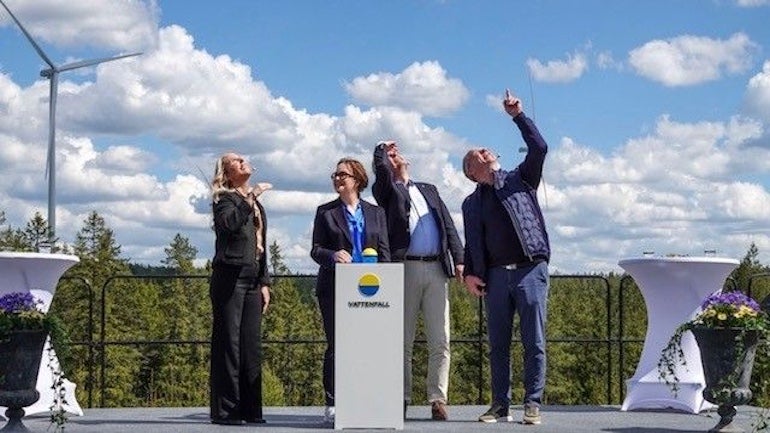
A 139 MW onshore wind farm with integrated battery storage has entered operation at Bruzaholm in southern Sweden, adding flexible generation capacity to a region facing rising electricity demand.
The project, developed by Vattenfall, comprises 21 turbines with expected annual output of around 460 GWh. A co-located battery energy storage system is designed to support grid stability by smoothing variable generation and improving system responsiveness.
Ulrika Ritzén, Head of Onshore Wind at Vattenfall Europe, emphasised the broader significance of the hybrid configuration. “The combination of wind power and battery storage helps stabilise the electricity system – a clear example of how new technologies can strengthen the energy transition and enable the integration of more fossil-free electricity,” she said during the inauguration.
The project also reflects growing alignment between renewable generation and industrial demand. Under a ten-year power purchase agreement, Volvo Group will procure approximately 50% of the site’s output. CEO Martin Lundstedt highlighted the strategic importance of supply security, noting that “access to a stable and competitive electricity supply is one of the key issues for European industry.”
Delivery of the project involved close coordination between Vattenfall, Eksjö municipality and multiple contractors. Vattenfall CEO Anna Borg said such collaboration is essential to accelerating deployment: “This is how we accelerate the transition.”
At a local level, the project has supported economic activity through contractor involvement and municipal revenues linked to wind power. Additional community funding has been allocated to local infrastructure and amenities.
Sustainability considerations were incorporated during construction, including the use of lower-carbon materials and measures to reduce transport emissions.
With Bruzaholm now operational, Vattenfall has added dispatchable renewable capacity intended to support system resilience as electrification increases.


