
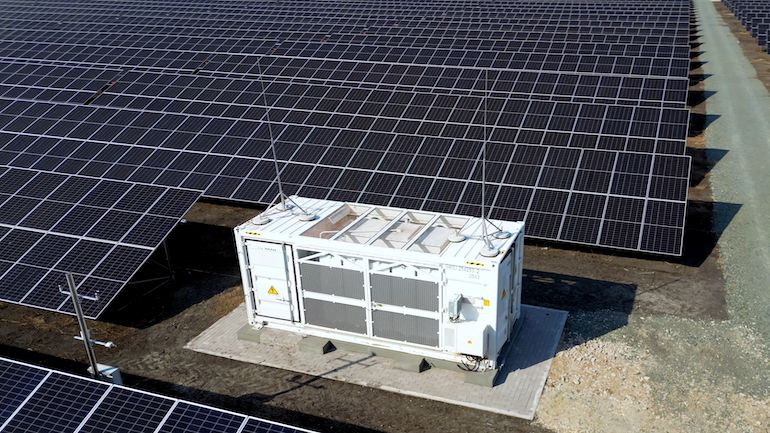
New solar installations in Germany fell 6% in the first quarter of 2026 compared to the same period last year, reports online news agency Clean Energy Wire, while battery storage capacity grew by 67 % to a record high, according to an analysis of grid regulator data by solar industry association BSW Solar. Residential solar installations dropped 21 % and commercial rooftop installations fell 33 %, while large-scale ground-mounted solar grew 20 %, bringing total new solar capacity to 3.5 gigawatts.
BSW Solar said it expected a temporary rise in solar demand in the coming weeks owing to the energy price spike caused by the war in Iran and customers rushing to install panels ahead of possible subsidy cuts. But the head of the lobby group, Carsten Körnig, cautioned that “a temporary solar boom, should it come, is no substitute for reliable investment conditions.”
The group warned that the cuts to solar support planned by the economy minister Katherina Reiche, a member of chancellor Friedrich Merz’s conservatives (CDU), risk deepening the decline in the longer term.
Germany’s government aims to make the country’s energy transition more cost-efficient to improve industry competitiveness. But environmentalists and Merz’s coalition partner, the Social Democrats (SPD), have repeatedly accused Reiche of slowing the switch to a more climate-friendly economy.
On the storage side, more than 2 GWh of new battery capacity came online between January and March, bringing Germany’s total installed battery storage to around 28 GWh across some 2.5 million installations. The growth was driven largely by large-scale systems, where new capacity nearly quadrupled compared to the same period last year. Mid-size commercial systems rose more than 40 %, while home battery installations remained roughly on the same level as a year ago.
Körnig urged the government not to disadvantage batteries in upcoming power plant auctions under a draft law aiming to guarantee supply security with a capacity market, published by the economy ministry last month. Germany needs to build backup power capacity for times of low wind and solar contributions, with gas-fired power plants seen as crucial to enabling the coal phase-out.
“Battery storage can significantly reduce the need for expensive backup gas power plants,” he said, adding that existing installed stationary battery capacity already equals the daily power output of more than two of the planned reserve gas plants. “Compared to gas-fired power stations, they can be built more quickly, produce no direct CO2 emissions and reduce system costs by efficiently integrating renewable energy and alleviating grid congestion” he added.


