
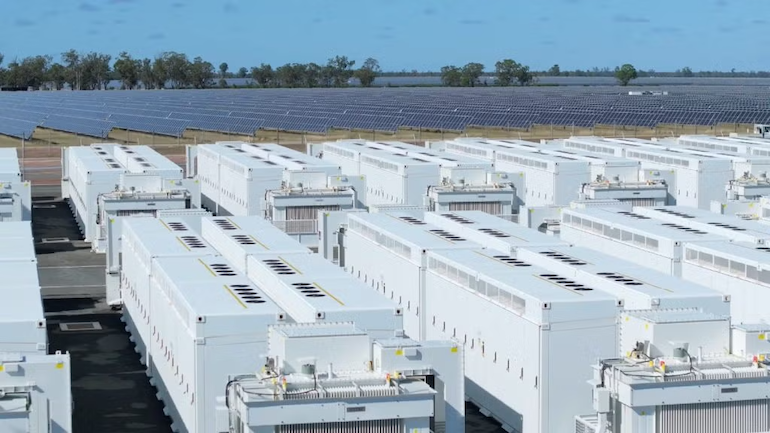
MN8 Energy, Eos Energy Enterprises and Google are developing a 166 MW clean energy project in West Virginia that will combine solar generation with both short- and long-duration battery storage to provide more flexible capacity to the PJM electricity market.
The Mammoth Solar project in Kanawha County will comprise 86 MW of utility-scale solar, 70 MW/280 MWh of lithium-ion storage and a 10 MW/100 MWh zinc-based long-duration energy storage (LDES) system supplied by Eos.
MN8 will own and operate the facility, with Google agreeing to purchase its energy, capacity and clean energy attributes. The project is intended to support rising electricity demand associated with data centre development, including Google’s planned infrastructure in West Virginia.
Construction is scheduled to bring the different elements online in stages. Solar generation is expected to enter commercial operation in 2028, followed by the lithium-ion system in 2029 and the Eos long-duration storage system in 2030.
The project is designed around combining storage technologies with different operating characteristics. The lithium-ion system can respond rapidly to changes in generation and demand, while the 100 MWh Eos system is designed to discharge for up to 10 hours. Together, the systems are intended to extend the period during which the solar plant can provide dependable power.
The Eos installation will be the company’s first commercial-scale deployment of its zinc-based long-duration technology in West Virginia and Google’s first project using Eos’s Z3 system.
The development is also being built on a reclaimed coal mine, giving the project a role in repurposing former energy infrastructure while adding renewable generation to the regional grid.
MN8 estimates capital investment at up to $350 million. The company expects construction to create about 200 jobs, while the project is forecast to generate around $4 million in property tax revenue for Kanawha County and local schools during its first 20 years.
Google’s Lucia Tian said the partnership aims to deploy “round-the-clock technology solutions” alongside the company’s growing data centre capacity.
The project illustrates how large electricity users are increasingly looking beyond standalone renewable generation, combining solar with different forms of storage to provide a more controllable resource as demand on regional grids rises.


